Sail area / displacement
How much sail the boat carries for its weight — its power in light air.
- not published: sail area
How it is worked out
sail area (ft²) ÷ (displacement as ft³ of seawater)^⅔
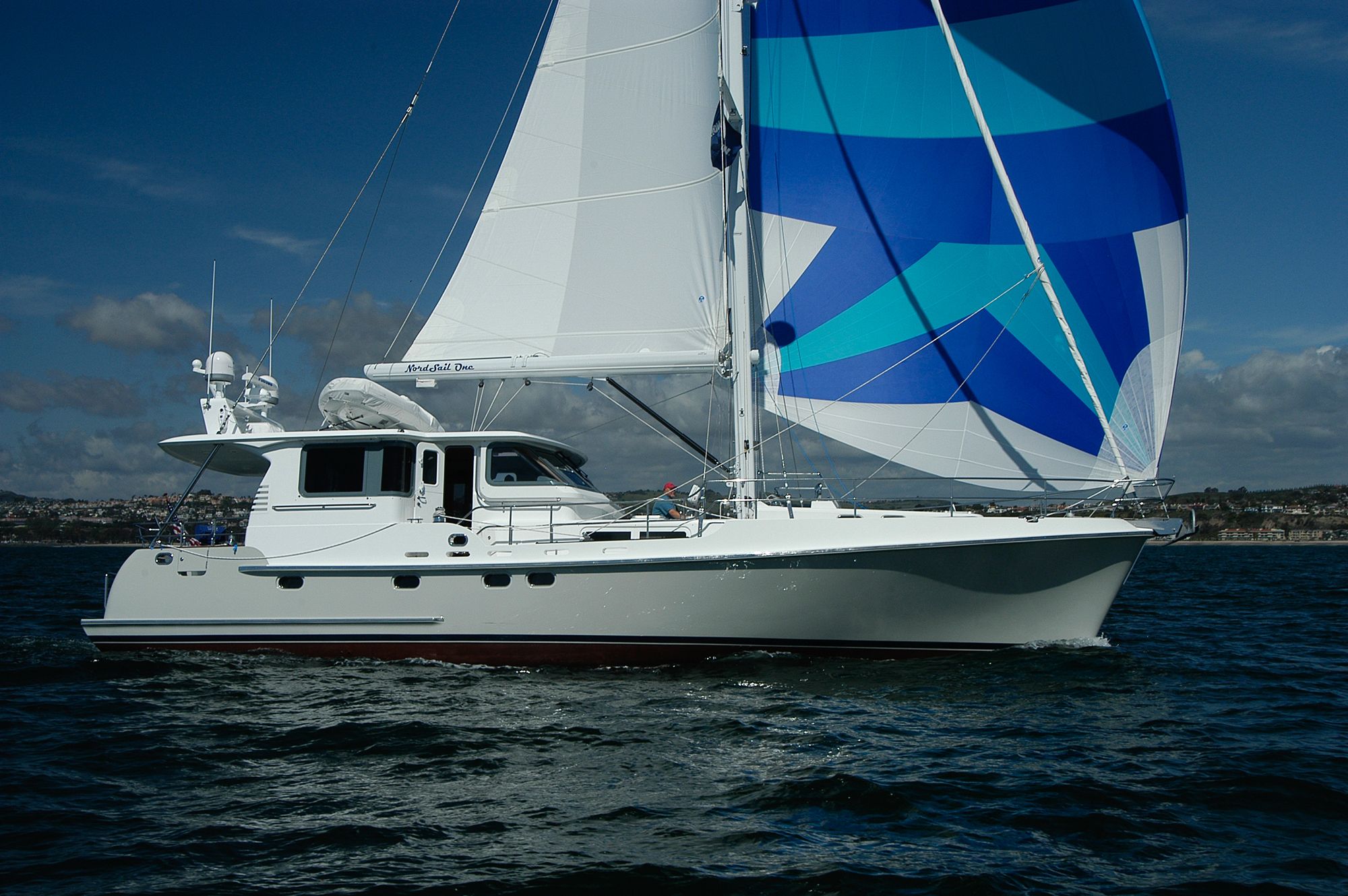
1 / 10
N56-running-1 — Nordhavn / Pacific Asian Enterprises
* A standard reference image, not the actual boat — shown to help visualise this model's published dimensions.
Classic yacht-design ratios worked out from the builder's published figures, each shown against the bands designers read it by.
How much sail the boat carries for its weight — its power in light air.
sail area (ft²) ÷ (displacement as ft³ of seawater)^⅔
How heavy the boat is for its waterline length. Lower is lighter and quicker; higher is steadier and roomier.
displacement (long tons) ÷ (0.01 × waterline length in ft)³
The share of the weight carried in the keel — a rough guide to stiffness, though how deep that weight sits matters as much.
ballast ÷ displacement × 100
Ted Brewer's measure of how gently a boat moves in a seaway. Higher means a slower, easier motion.
displacement (lb) ÷ (0.65 × (0.7 × LWL + 0.3 × LOA) × beam^1.333), lengths in ft
A guide from the inquiry after the 1979 Fastnet race: below 2 was taken as suited to ocean passages. It ignores hull shape and where the ballast sits.
beam (ft) ÷ (displacement as ft³ of seawater)^⅓
Roughly the speed a displacement hull reaches before it has to climb its own bow wave.
1.34 × √(waterline length in ft), in knots
Most builders publish a light displacement. The ratios were defined on a loaded boat, so every boat here reads a little lighter than a surveyor's figure would — all alike, which keeps them comparable.
What the builder publishes about how fast, how strong and how much the boat carries.
Fuel and water on one scale: a tank twice the height holds twice as much.
Figures read fromnordhavn.com/models/n56ms/· Specificationsread 9/18/2026
2 drawings from the builder's page: general arrangement, sail plan, profile.
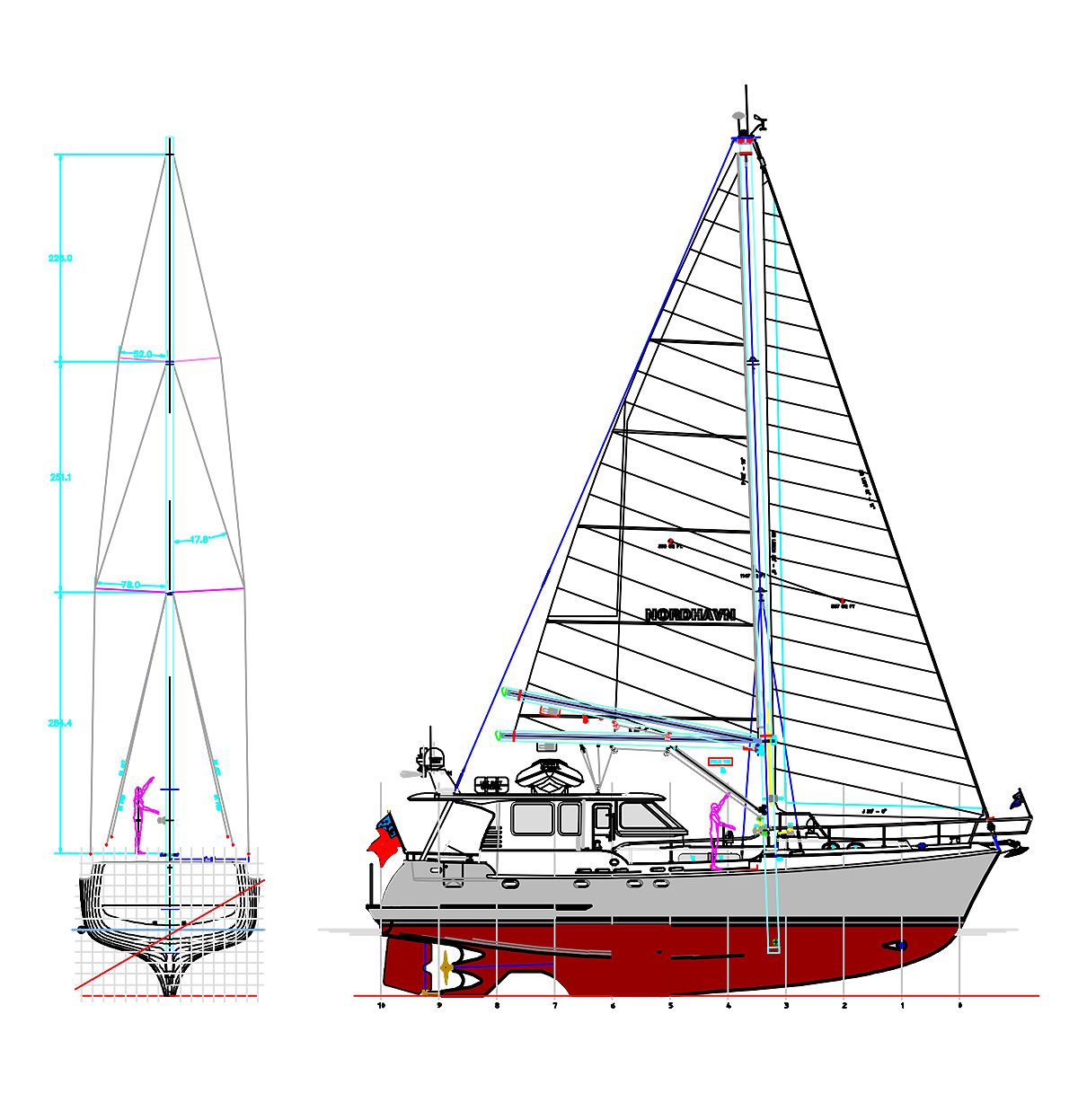
N56MS-drawing-profile — Nordhavn / Pacific Asian Enterprises
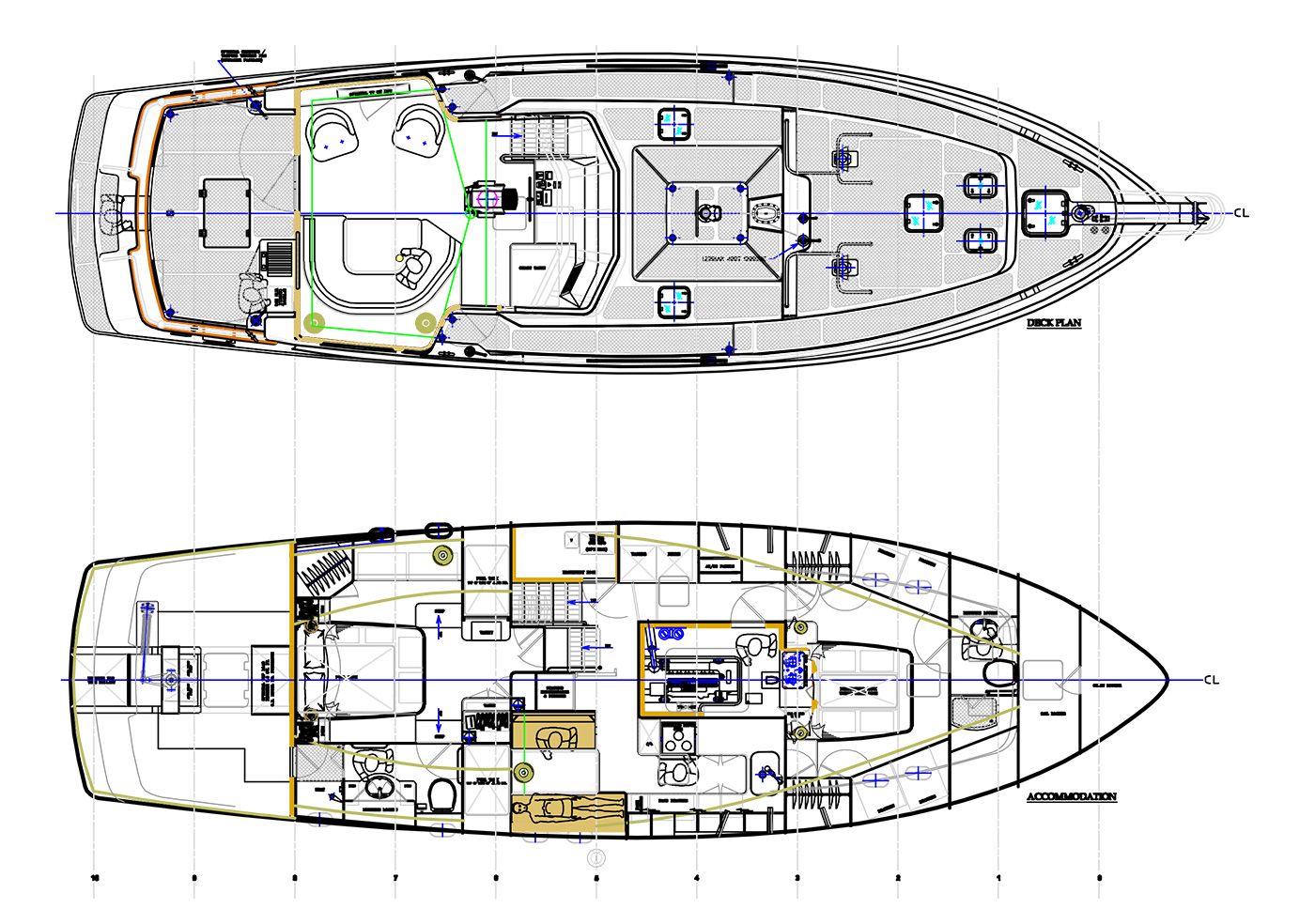
N56MS-drawing-interior — Nordhavn / Pacific Asian Enterprises
Semi-custom
The full-displacement passagemaker brand of Pacific Asian Enterprises, Dana Point, California — nineteen models from the 12.6-metre Nordhavn 41 to the 36.8-metre Nordhavn 120, built in Taiwan and Xiamen since the first Nordhavn 46 of 1989, with more ocean crossings and circumnavigations than any other production motor yacht.
Jim Leishman and Dan Streech met in 1973 at a yacht dealership in Dana Point, California, and when it closed in 1974 they formed a small brokerage with Joe Meglen that grew into Pacific Asian Enterprises, importing CT boats and, from 1976, the Transpac 49 from Taiwan and working with the builders there to raise their quality. By 1977 PAE set out to own its own line: designer Al Mason drew the Mason sailboats that PAE developed and Taiwan yards built. When the cruising-sailboat market declined in the late 1980s, Jeff Leishman's design for a 46-foot passagemaking powerboat became the next project; named Nordhavn, Norwegian for 'north harbour', for its trawler-like look, hull number one of the N46 shipped in early 1989, at a time when it was still believed that only a sailboat could cross oceans. The last Mason was built in 1995, offices opened from Rhode Island to the UK and Australia between 2001 and 2007, the N55 and N64 arrived in 2004 with the Nordhavn Atlantic Rally, and in 2008 the 21-acre Xiamen factory, able to build Nordhavns of up to a thousand tons, was completed as work on the N120 began.
Visit brand pageEvery model Nordhavn publishes, by length — where this one sits in the range.