Sail area / displacement
How much sail the boat carries for its weight — its power in light air.
- 32.0· Racing
How it is worked out
sail area (ft²) ÷ (displacement as ft³ of seawater)^⅔
published upwind sail area
1 / 10
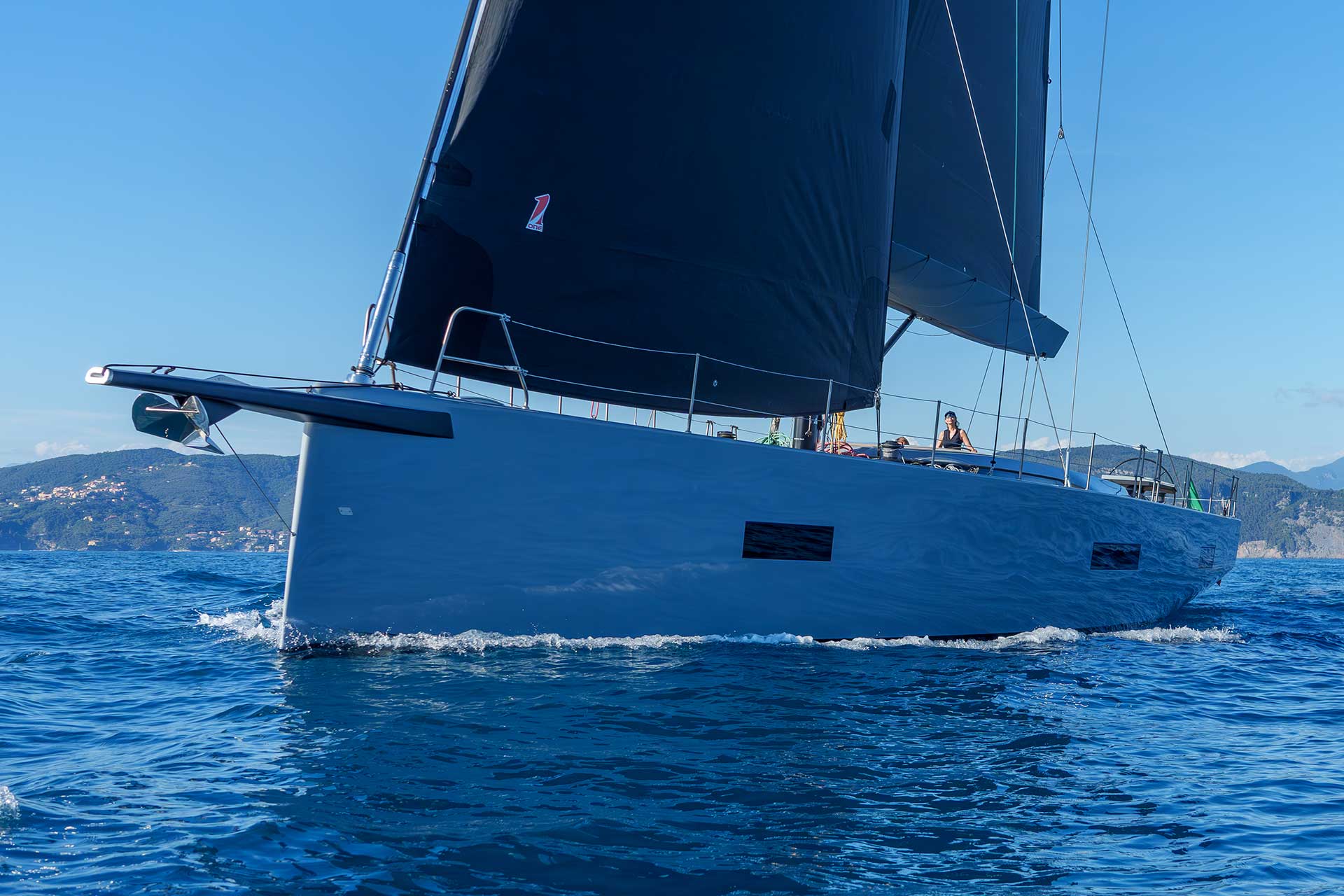
Ice-66-exterior-09 — ICE Yachts
* A standard reference image, not the actual boat — shown to help visualise this model's published dimensions.
From the published figures: SA/D 32.0 (upwind 276 m², displacement 26000 kg) · 4 cabins
From the published figures: LOA 19.9 m · 4 cabins
Tags are derived from certified class, length, sail area, accommodation and tankage using the criteria described on the Sources page; an editor may add or remove one.
Classic yacht-design ratios worked out from the builder's published figures, each shown against the bands designers read it by.
How much sail the boat carries for its weight — its power in light air.
sail area (ft²) ÷ (displacement as ft³ of seawater)^⅔
published upwind sail area
How heavy the boat is for its waterline length. Lower is lighter and quicker; higher is steadier and roomier.
displacement (long tons) ÷ (0.01 × waterline length in ft)³
The share of the weight carried in the keel — a rough guide to stiffness, though how deep that weight sits matters as much.
ballast ÷ displacement × 100
Ted Brewer's measure of how gently a boat moves in a seaway. Higher means a slower, easier motion.
displacement (lb) ÷ (0.65 × (0.7 × LWL + 0.3 × LOA) × beam^1.333), lengths in ft
A guide from the inquiry after the 1979 Fastnet race: below 2 was taken as suited to ocean passages. It ignores hull shape and where the ballast sits.
beam (ft) ÷ (displacement as ft³ of seawater)^⅓
Roughly the speed a displacement hull reaches before it has to climb its own bow wave.
1.34 × √(waterline length in ft), in knots
Most builders publish a light displacement. The ratios were defined on a loaded boat, so every boat here reads a little lighter than a surveyor's figure would — all alike, which keeps them comparable.
Figures read fromiceyachts.it/ice-66-rs/· datiread 9/18/2026
Semi-custom
Italian builder of carbon-epoxy performance cruisers from Salvirola near Cremona — fourteen Felci-designed monohulls from the 15.8-metre ICE 52 to the 24-metre ICE 80, plus the ICE Cat sixty four and seventytwo catamarans by Micheletti+Partners, all infused in carbon and glass with carbon rigs.
Visit brand pageEvery model ICE Yachts publishes, by length — where this one sits in the range.
Baltic Yachts
LOA: 20.52 m
ICE Yachts
LOA: 21.3 m
ICE Yachts
LOA: 21.3 m
ICE Yachts
LOA: 21.3 m