Sail area / displacement
How much sail the boat carries for its weight — its power in light air.
- not published: sail area
How it is worked out
sail area (ft²) ÷ (displacement as ft³ of seawater)^⅔
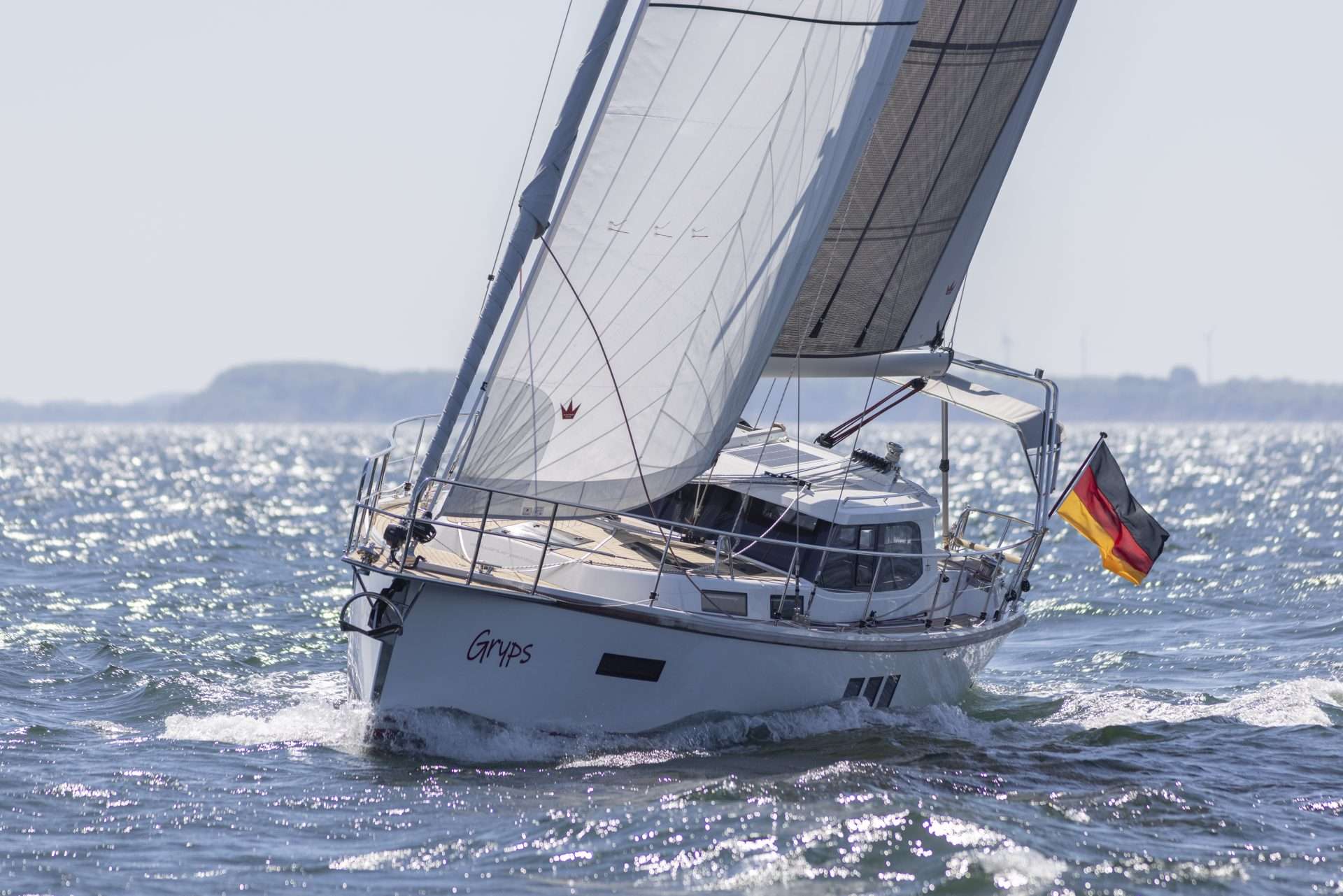
1 / 6
LI_7351_1-scaled — Sirius-Werft
* A standard reference image, not the actual boat — shown to help visualise this model's published dimensions.
From the published figures: LOA 12.9 m · 3 cabins · 2 heads · fresh water 400 L
Tags are derived from certified class, length, sail area, accommodation and tankage using the criteria described on the Sources page; an editor may add or remove one.
Classic yacht-design ratios worked out from the builder's published figures, each shown against the bands designers read it by.
How much sail the boat carries for its weight — its power in light air.
sail area (ft²) ÷ (displacement as ft³ of seawater)^⅔
How heavy the boat is for its waterline length. Lower is lighter and quicker; higher is steadier and roomier.
displacement (long tons) ÷ (0.01 × waterline length in ft)³
The share of the weight carried in the keel — a rough guide to stiffness, though how deep that weight sits matters as much.
ballast ÷ displacement × 100
Ted Brewer's measure of how gently a boat moves in a seaway. Higher means a slower, easier motion.
displacement (lb) ÷ (0.65 × (0.7 × LWL + 0.3 × LOA) × beam^1.333), lengths in ft
A guide from the inquiry after the 1979 Fastnet race: below 2 was taken as suited to ocean passages. It ignores hull shape and where the ballast sits.
beam (ft) ÷ (displacement as ft³ of seawater)^⅓
Roughly the speed a displacement hull reaches before it has to climb its own bow wave.
1.34 × √(waterline length in ft), in knots
Most builders publish a light displacement. The ratios were defined on a loaded boat, so every boat here reads a little lighter than a surveyor's figure would — all alike, which keeps them comparable.
What the builder publishes about how fast, how strong and how much the boat carries.
Fuel and water on one scale: a tank twice the height holds twice as much.
18 gal of water per berth
Figures read fromsirius-yachts.com/yachts/40ds· Technical dataread 10/18/2026
4 drawings from the builder's page: general arrangement, sail plan, profile.
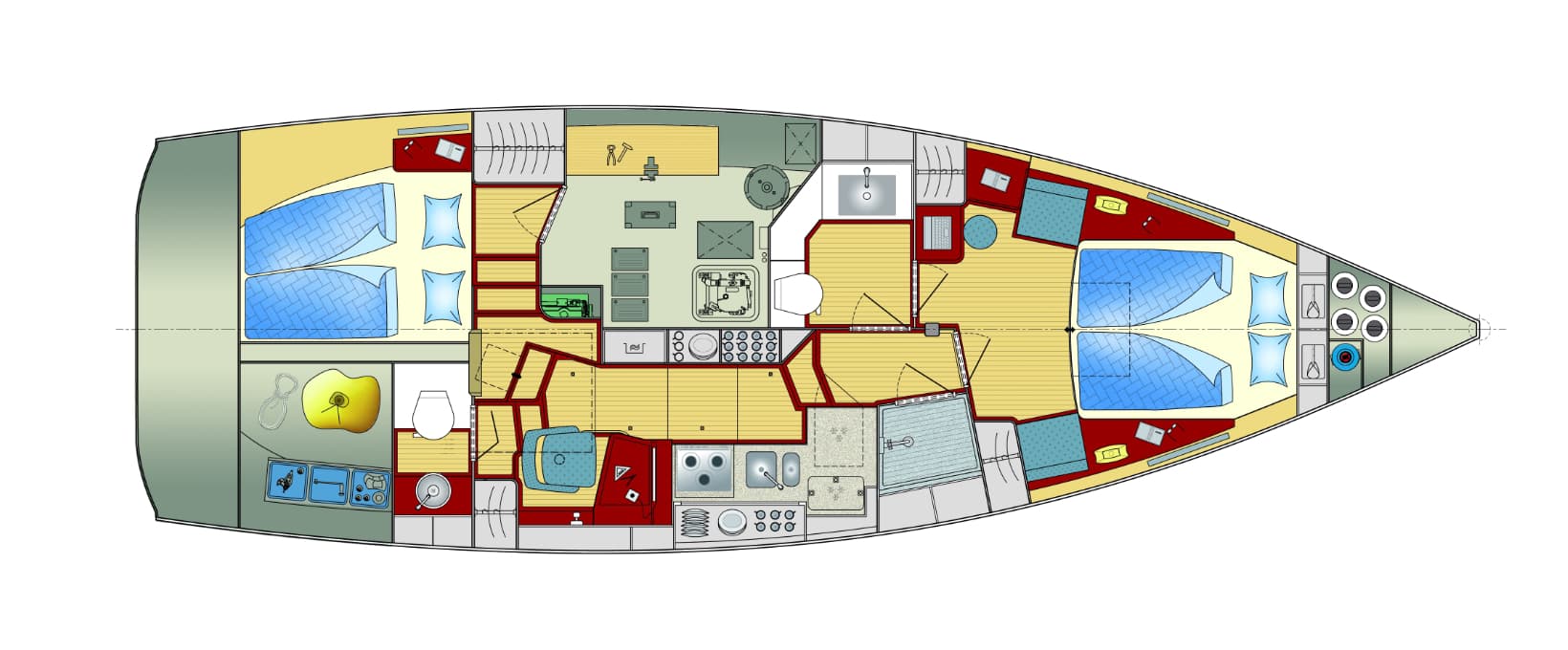
40-DS-f-4-berth-for-2-Version-with-aft-cabin-stb-separate-shower-and-day-heads-OPT — Sirius-Werft
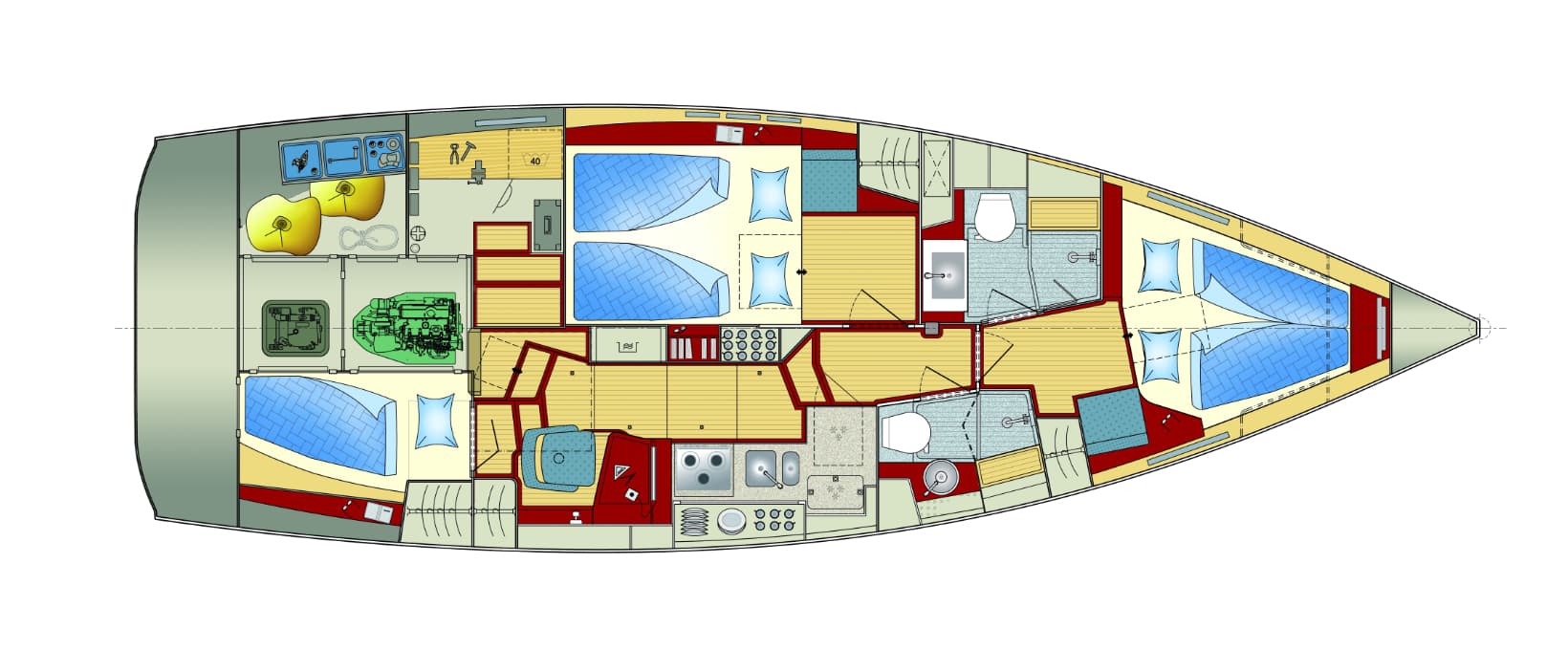
40-DS-d-5-berth-version-with-V-bed-in-front-cabin-2-heads-with-showers-OPT — Sirius-Werft
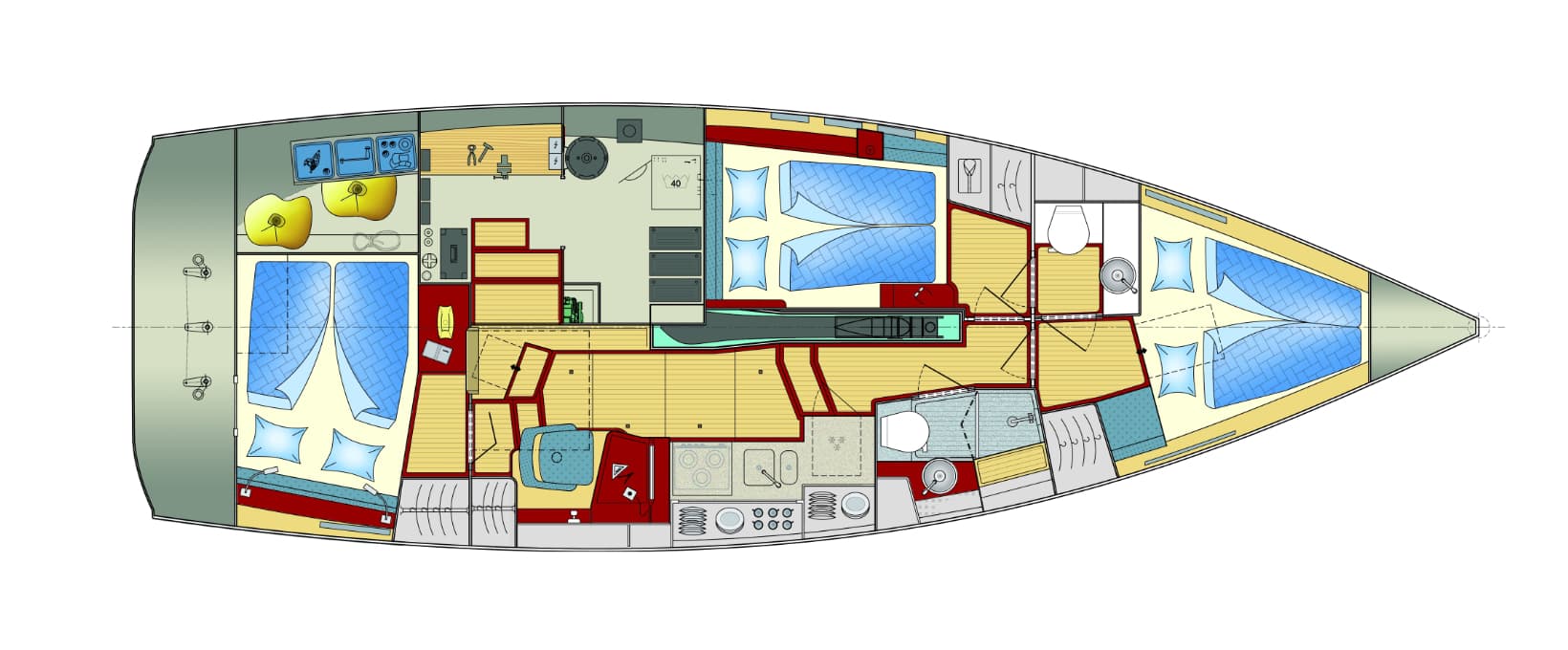
40-DS-e-6-berth-swing-keel-version-OPT — Sirius-Werft
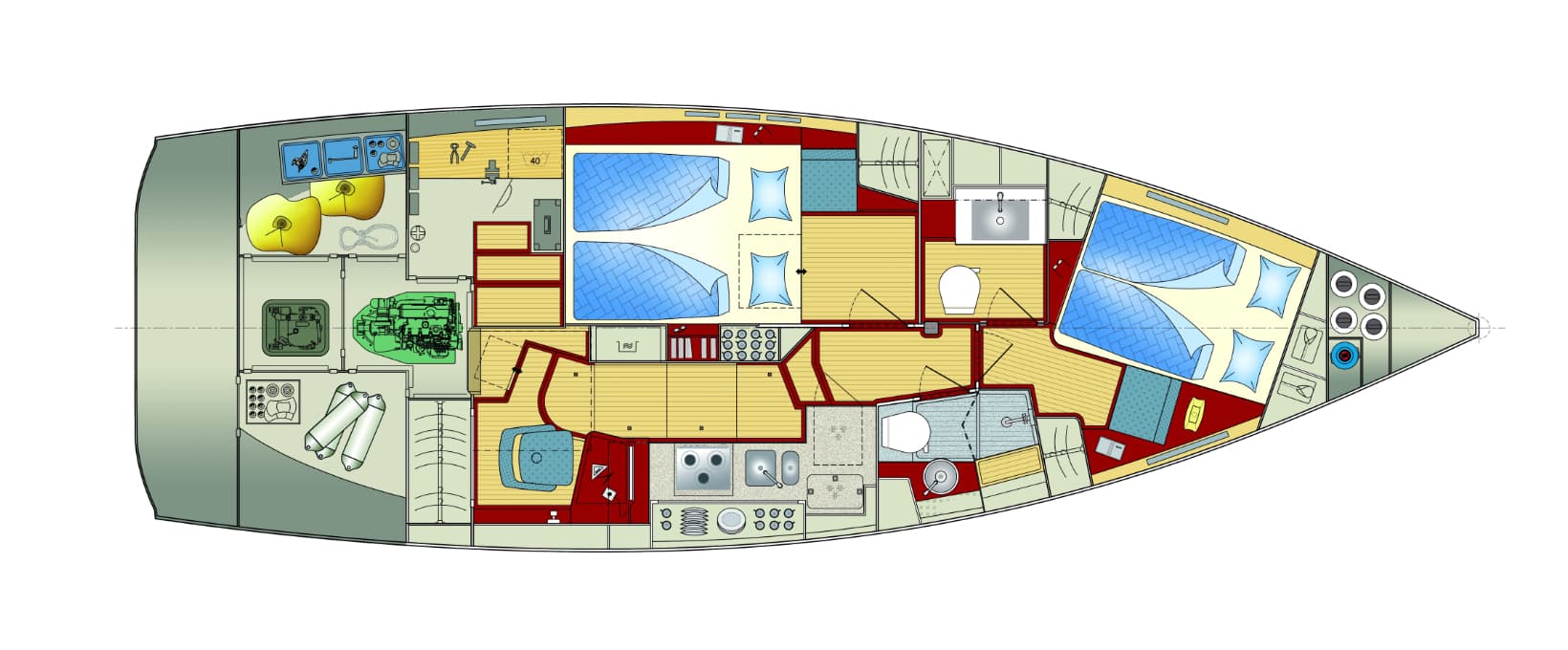
40-DS-a-4-berth-with-front-cabin-bed-to-port-OPT — Sirius-Werft
Semi-custom
Family-owned yard in Plön, northern Germany, building hand-made deck-saloon cruising sailboats since 1971 — the Sirius 35 DS and 40 DS, each with a custom interior and a choice of fin, twin or lifting keel.
Sirius Yachts describes itself as boats 'built by craftsmen, with love, since 1971', from the family-owned boat builder that invented the phrase 'deck-saloon'. From its German yard it offers a range of go-anywhere deck-saloon sailboats with hand-crafted, custom-built interiors in mahogany, each available with a single fin keel, a lifting keel or twin keels, and no two yachts from the factory are identical. The yard says it brings nearly half a century of experience building deck-saloon yachts and the experience of more than 650 owners to each new boat: it works through hundreds of design decisions with the buyer — from the rig and sailcloth to the reading lights in the master cabin, and galley drawers made to fit the owner's own cookware — before production begins. The build then takes four to six months; most owners visit the yard several times, receive regular progress pictures by email, and can leave their cutlery, crockery and glassware with the yard so that its storage is made to measure.
Visit brand pageEvery model Sirius Yachts publishes, by length — where this one sits in the range.