Tanks
One scale per liquid across every boat: a tank twice the height holds twice as much.
GS Plus 65 P
Fuel219 galWater238 galICE 70
Fuel317 galWater291 gal
GS Plus 65 P is 0.6 ft wider than ICE 70 (3%). ICE 70 draws the least water, 9.2 ft — 2.3 ft less than GS Plus 65 P.
Worked out from the published figures below — arithmetic, not opinion.
Dark icons are the standard layout; faded ones are what the larger layout adds.
Grand Soleil
GS Plus 65 P
Sailing Monohull
Length : beam 3.6 : 1
ICE Yachts
ICE 70
Sailing Monohull
Length : beam 3.7 : 1
Length : beam is length divided by beam — the higher it is, the slimmer the hull. Multihulls read low by nature.
A figure marked with a quote mark was read from the builder's page. Open it for the exact line, the page and the date.
| Model | 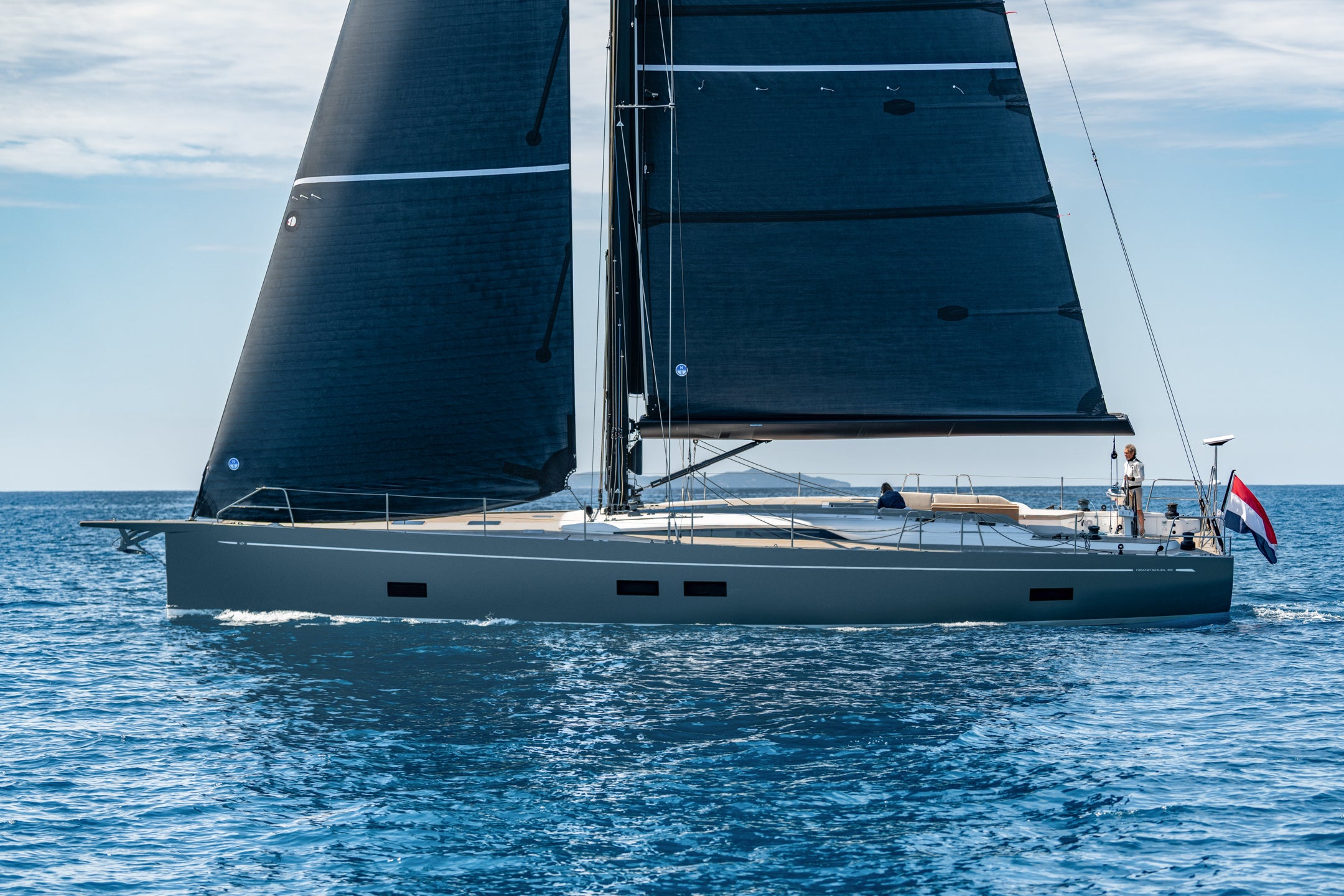 Grand Soleil GS Plus 65 P | 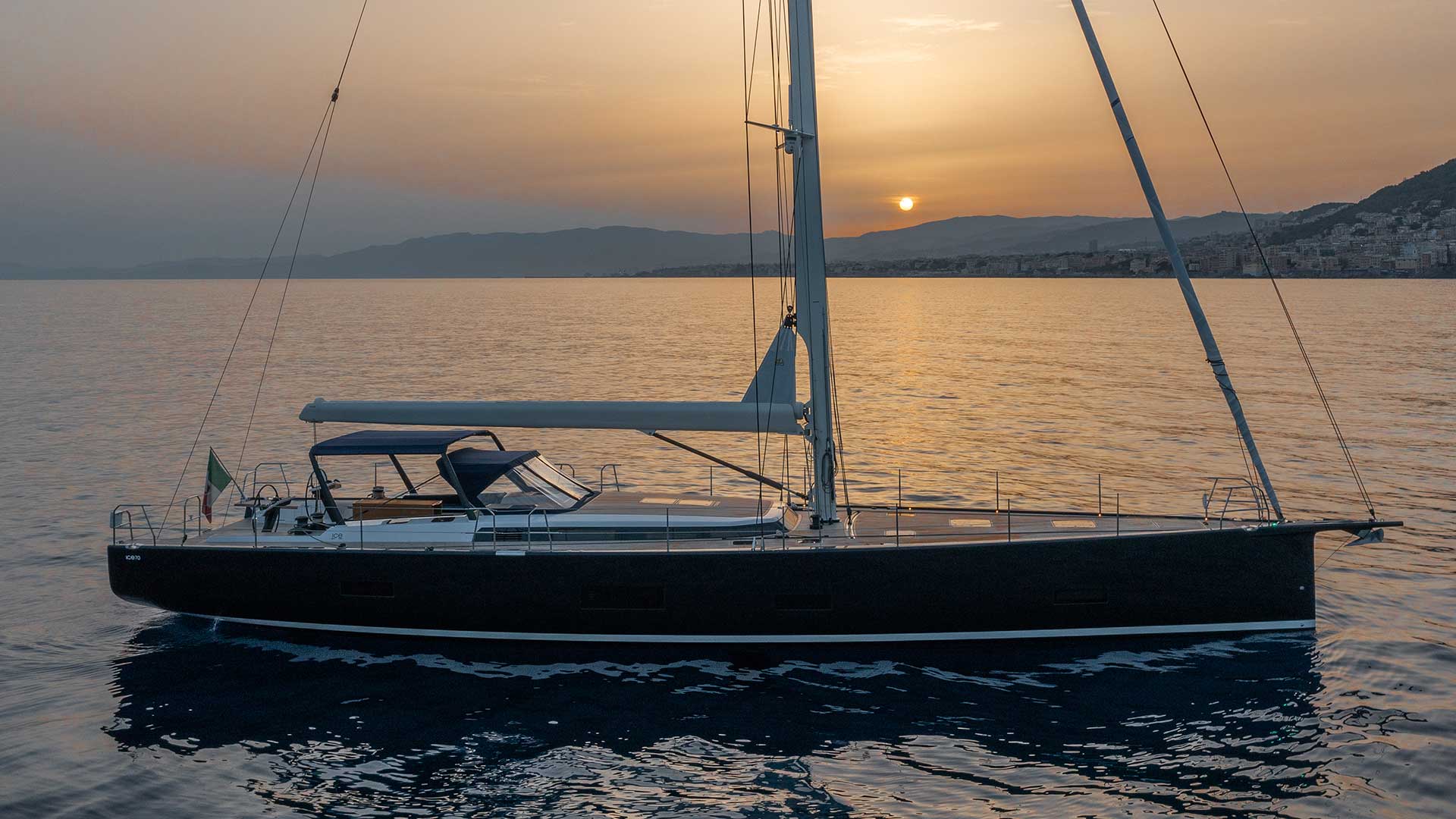 ICE Yachts ICE 70 |
|---|---|---|
| Overview | ||
| Brand | Grand Soleil | ICE Yachts |
| Model | GS Plus 65 P | ICE 70 |
| Generation | Unknown | Unknown |
| Hull type | Sailing Monohull | Sailing Monohull |
| Propulsion | Sail | Sail |
| Production status | In production | In production |
| Production start year | Unknown | Unknown |
| Production end year | Unknown | Unknown |
| Designer | Unknown | Unknown |
| Dimensions | ||
| LOA | 70.9 ft | 69.9 ft |
| Hull length | 65.9 ft | Unknown |
| Beam | 19.5 ft | 18.9 ft |
| Draft | 11.5 ft | 9.2 ft–14.8 ft |
| Displacement | 59,525 lb | 56,218 lb |
| Accommodation | ||
| Cabins | 3 | 3 |
| Heads | 3 | 3 |
| Berths | Unknown | Unknown |
| Performance & Rig | ||
| Main sail | Unknown | 1,593 ft² |
| Jib | Unknown | Unknown |
| Genoa | Unknown | Unknown |
| Upwind sail area | 2,992 ft² | 2,788 ft² |
| Downwind sail area | Unknown | 4,064 ft² |
| Engine power | 150 hp–170 hp | 195 hp |
| Engine count | 1 | Unknown |
| Materials | ||
| Hull material | carbon/vinyl ester GRP | carbon/glass epoxy sandwich |
| Deck material | Unknown | Unknown |
| Mast material | Unknown | Unknown |
| Keel type | inverted T-keel | Unknown |
| Rudder type | Unknown | Unknown |
| Sources | Figures read fromwww.grandsoleil.net/products/gs-plus-65-p· TECHNICAL INFOread 9/22/2026 10 of 12 figures here carry the builder's own words | Figures read fromiceyachts.it/ice-70/· datiread 9/18/2026 |
Each boat's published length and beam seen from above, and its mast height and draft from the side, all drawn on one scale.
Outlines are schematic; the dimensions are the builder's.
What the builders publish about how fast, how strong and how far — each figure on one scale for every boat.
One scale per liquid across every boat: a tank twice the height holds twice as much.
GS Plus 65 P
ICE 70
Classic yacht-design ratios worked out from each builder's published figures. They compare boats; they don't grade them.
How much sail the boat carries for its weight — its power in light air.
sail area (ft²) ÷ (displacement as ft³ of seawater)^⅔
GS Plus 65 P: published upwind sail area
ICE 70: published upwind sail area
How heavy the boat is for its waterline length. Lower is lighter and quicker; higher is steadier and roomier.
displacement (long tons) ÷ (0.01 × waterline length in ft)³
The share of the weight carried in the keel — a rough guide to stiffness, though how deep that weight sits matters as much.
ballast ÷ displacement × 100
Ted Brewer's measure of how gently a boat moves in a seaway. Higher means a slower, easier motion.
displacement (lb) ÷ (0.65 × (0.7 × LWL + 0.3 × LOA) × beam^1.333), lengths in ft
A guide from the inquiry after the 1979 Fastnet race: below 2 was taken as suited to ocean passages. It ignores hull shape and where the ballast sits.
beam (ft) ÷ (displacement as ft³ of seawater)^⅓
Roughly the speed a displacement hull reaches before it has to climb its own bow wave.
1.34 × √(waterline length in ft), in knots
Most builders publish a light displacement. The ratios were defined on a loaded boat, so every boat here reads a little lighter than a surveyor's figure would — all alike, which keeps them comparable.
The boats most like the ones above, by hull form, size and use.
ICE Yachts
ICE 70 SuiteSailing Monohull · 69.9 ft
Grand Soleil
GS Plus 65 LCSailing Monohull · 70.9 ft
Mylius Yachts
Mylius M66RSSailing Monohull · 72.9 ft
Mylius Yachts
Mylius M72Sailing Monohull · 73 ft