Sail area / displacement
How much sail the boat carries for its weight — its power in light air.
- 26.8· Racing
How it is worked out
sail area (ft²) ÷ (displacement as ft³ of seawater)^⅔
published upwind sail area
1 / 12
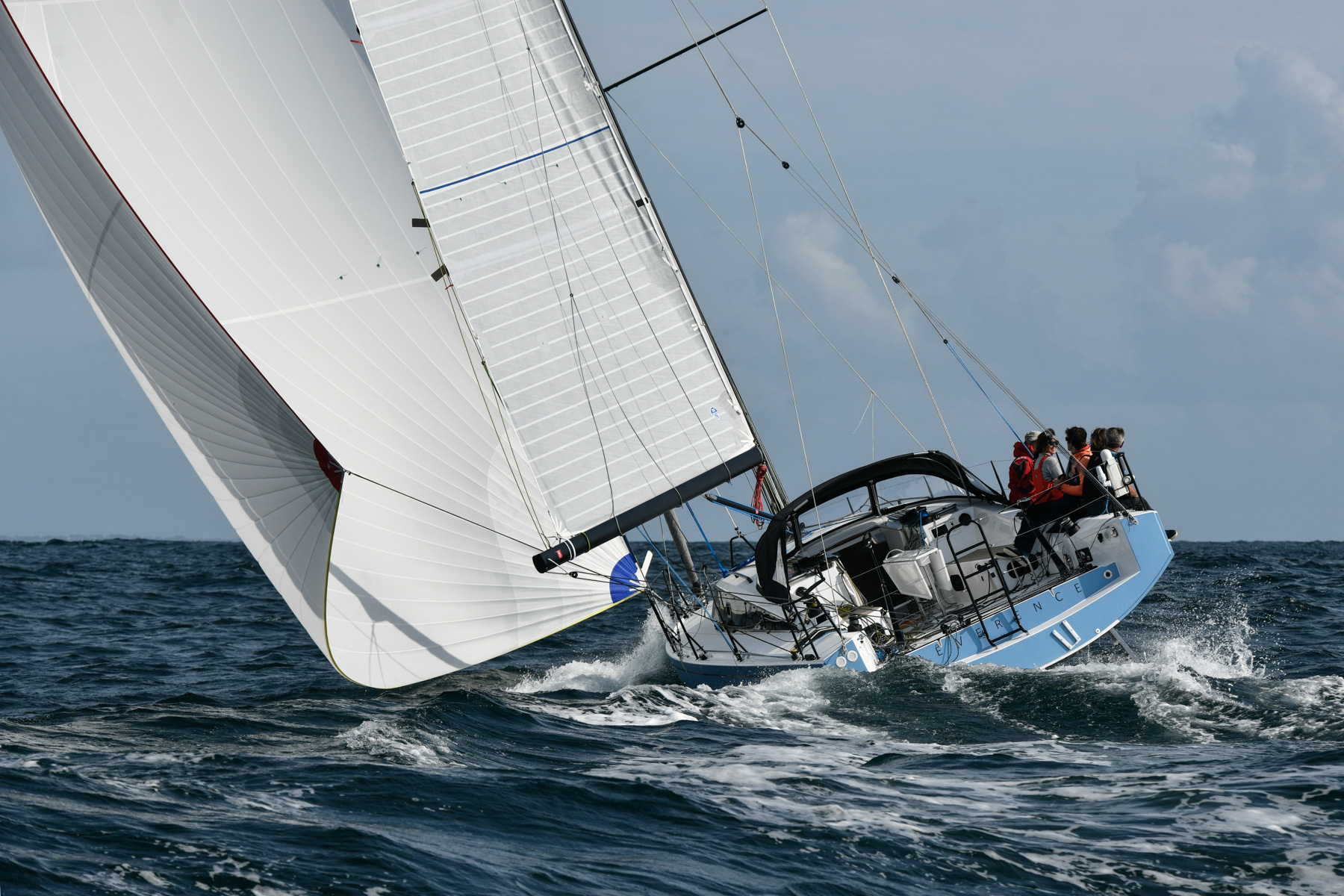
JPK-39-FC-6 — JPK Composites
* A standard reference image, not the actual boat — shown to help visualise this model's published dimensions.
From the published figures: SA/D 26.8 (upwind 82 m², displacement 5500 kg) · 3 cabins
From the published figures: hull length 11.72 m · upwind 82 m²
From the published figures: hull length 11.72 m · 3 cabins
Tags are derived from certified class, length, sail area, accommodation and tankage using the criteria described on the Sources page; an editor may add or remove one.
Classic yacht-design ratios worked out from the builder's published figures, each shown against the bands designers read it by.
How much sail the boat carries for its weight — its power in light air.
sail area (ft²) ÷ (displacement as ft³ of seawater)^⅔
published upwind sail area
How heavy the boat is for its waterline length. Lower is lighter and quicker; higher is steadier and roomier.
displacement (long tons) ÷ (0.01 × waterline length in ft)³
The share of the weight carried in the keel — a rough guide to stiffness, though how deep that weight sits matters as much.
ballast ÷ displacement × 100
Ted Brewer's measure of how gently a boat moves in a seaway. Higher means a slower, easier motion.
displacement (lb) ÷ (0.65 × (0.7 × LWL + 0.3 × LOA) × beam^1.333), lengths in ft
A guide from the inquiry after the 1979 Fastnet race: below 2 was taken as suited to ocean passages. It ignores hull shape and where the ballast sits.
beam (ft) ÷ (displacement as ft³ of seawater)^⅓
Roughly the speed a displacement hull reaches before it has to climb its own bow wave.
1.34 × √(waterline length in ft), in knots
Most builders publish a light displacement. The ratios were defined on a loaded boat, so every boat here reads a little lighter than a surveyor's figure would — all alike, which keeps them comparable.
Figures read fromjpk.fr/en/gamme/jpk-39-fc/· Dimensionsread 9/14/2026
4 drawings from the builder's page: general arrangement, sail plan, profile.

DECO_interieur-39_plans-39-18 — JPK Composites

DECO_interieur-39_plans-39-17 — JPK Composites
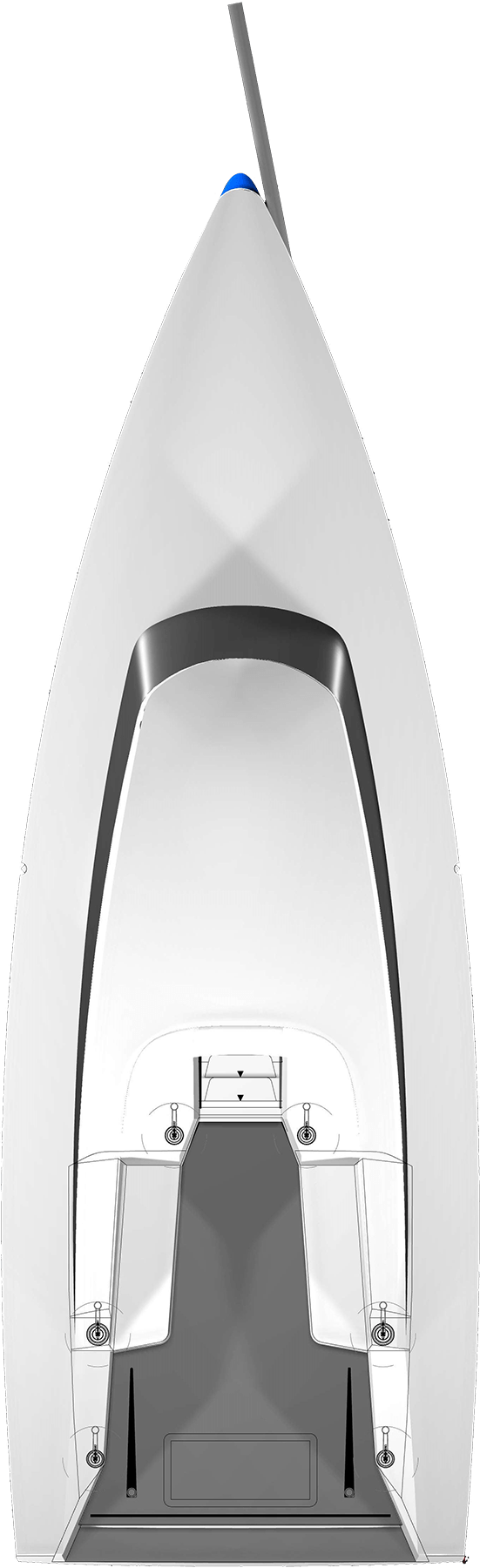
Pont-39-FC — JPK Composites

DECO_lines-39-16 — JPK Composites
Semi-custom
Breton builder of IRC racers and fast cruisers drawn by Jacques Valer — JPK 1050 and 1180, the 39 FC and the coming 48 FC, plus the Nomad 40 motor cruiser — founded in 1992 by windsurfing champion Jean-Pierre Kelbert and building at Larmor-Plage near Lorient since the JPK 960 of 2003.
JPK tells its history in its founder's own words. Jean-Pierre Kelbert caught the sailing bug at thirteen, raced windsurfers through the boom years of the 1980s, joined the French team in 1986, was European champion in 1988 and 1989 and second in the Olympic selection for Seoul 1988. In 1992 he founded JPK Composites to build high-end epoxy-sandwich funboards; after French and world titles and an eight-year speed record, the venture turned to sailing yachts in 2002, and meeting the naval architect Jacques Valer brought the first JPK 960 into the water in March 2003. The JPK 1010, still drawn by Valer, built the yard's record with overall wins in the Transquadra of 2006, 2009, 2012 and 2015 and the 2013 Fastnet; a Fast Cruiser range opened in April 2012 with the JPK 38, Sailboat of the Year 2013, the 1080 of 2014 was European Boat of the Year 2015 after winning the Rolex Fastnet and Sydney Hobart overall in one season, the JPK 45 took the 2016 title and the 1180 of 2018 won the 2019 Fastnet two-handed by over five hours. The JPK 39 FC replaced the 38 in 2021 and was Sailboat of the Year 2022, and in 2023 the yard built its first motor boat, the JPK Nomad 40.
Visit brand pageEvery model JPK Composites publishes, by length — where this one sits in the range.