Sail area / displacement
How much sail the boat carries for its weight — its power in light air.
- not published: sail area
How it is worked out
sail area (ft²) ÷ (displacement as ft³ of seawater)^⅔
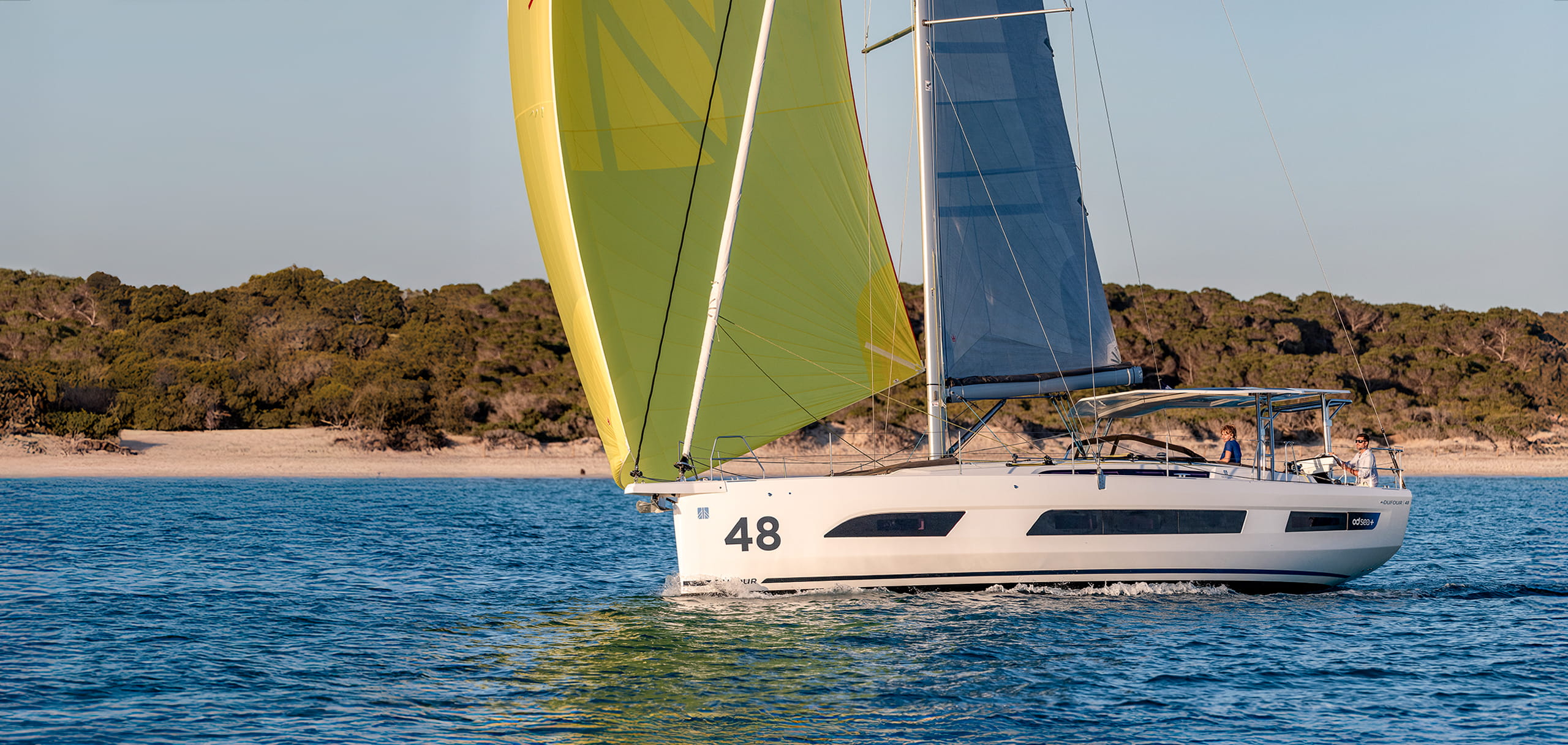
1 / 15
Header-Desktop-Dufour-48-2 — Dufour Yachts
* A standard reference image, not the actual boat — shown to help visualise this model's published dimensions.
From the published figures: LOA 15.29 m · 4 cabins · 3 heads · fresh water 530 L
Tags are derived from certified class, length, sail area, accommodation and tankage using the criteria described on the Sources page; an editor may add or remove one.
Classic yacht-design ratios worked out from the builder's published figures, each shown against the bands designers read it by.
How much sail the boat carries for its weight — its power in light air.
sail area (ft²) ÷ (displacement as ft³ of seawater)^⅔
How heavy the boat is for its waterline length. Lower is lighter and quicker; higher is steadier and roomier.
displacement (long tons) ÷ (0.01 × waterline length in ft)³
The share of the weight carried in the keel — a rough guide to stiffness, though how deep that weight sits matters as much.
ballast ÷ displacement × 100
Ted Brewer's measure of how gently a boat moves in a seaway. Higher means a slower, easier motion.
displacement (lb) ÷ (0.65 × (0.7 × LWL + 0.3 × LOA) × beam^1.333), lengths in ft
A guide from the inquiry after the 1979 Fastnet race: below 2 was taken as suited to ocean passages. It ignores hull shape and where the ballast sits.
beam (ft) ÷ (displacement as ft³ of seawater)^⅓
Roughly the speed a displacement hull reaches before it has to climb its own bow wave.
1.34 × √(waterline length in ft), in knots
Most builders publish a light displacement. The ratios were defined on a loaded boat, so every boat here reads a little lighter than a surveyor's figure would — all alike, which keeps them comparable.
What the builder publishes about how fast, how strong and how much the boat carries.
Fuel and water on one scale: a tank twice the height holds twice as much.
Figures read fromdufour-yachts.com/en/sailboats/dufour-48/· Featuresread 10/5/2026
4 drawings from the builder's page: general arrangement, sail plan, profile.
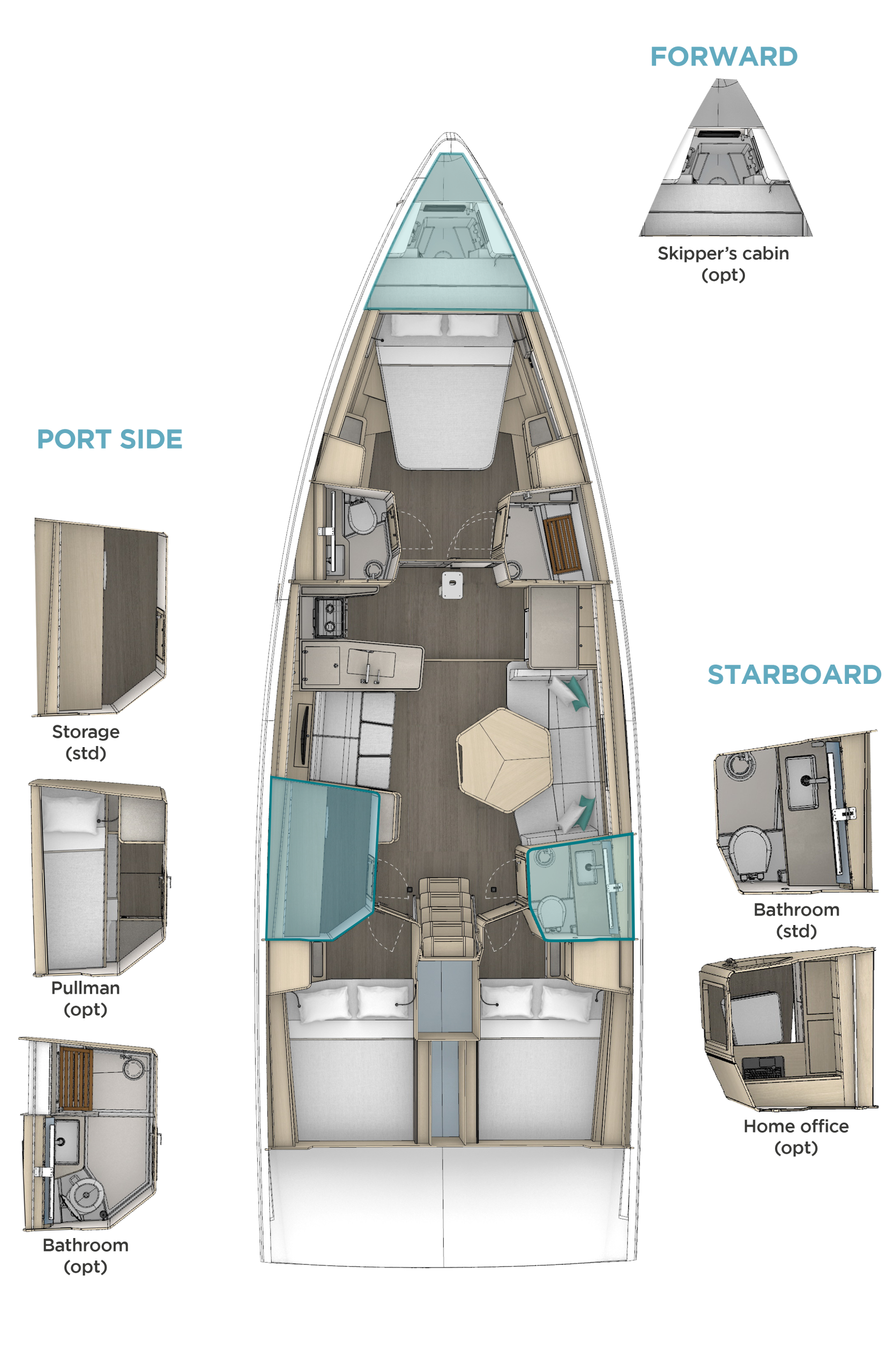
amenagement_48_site-1-scaled — Dufour Yachts
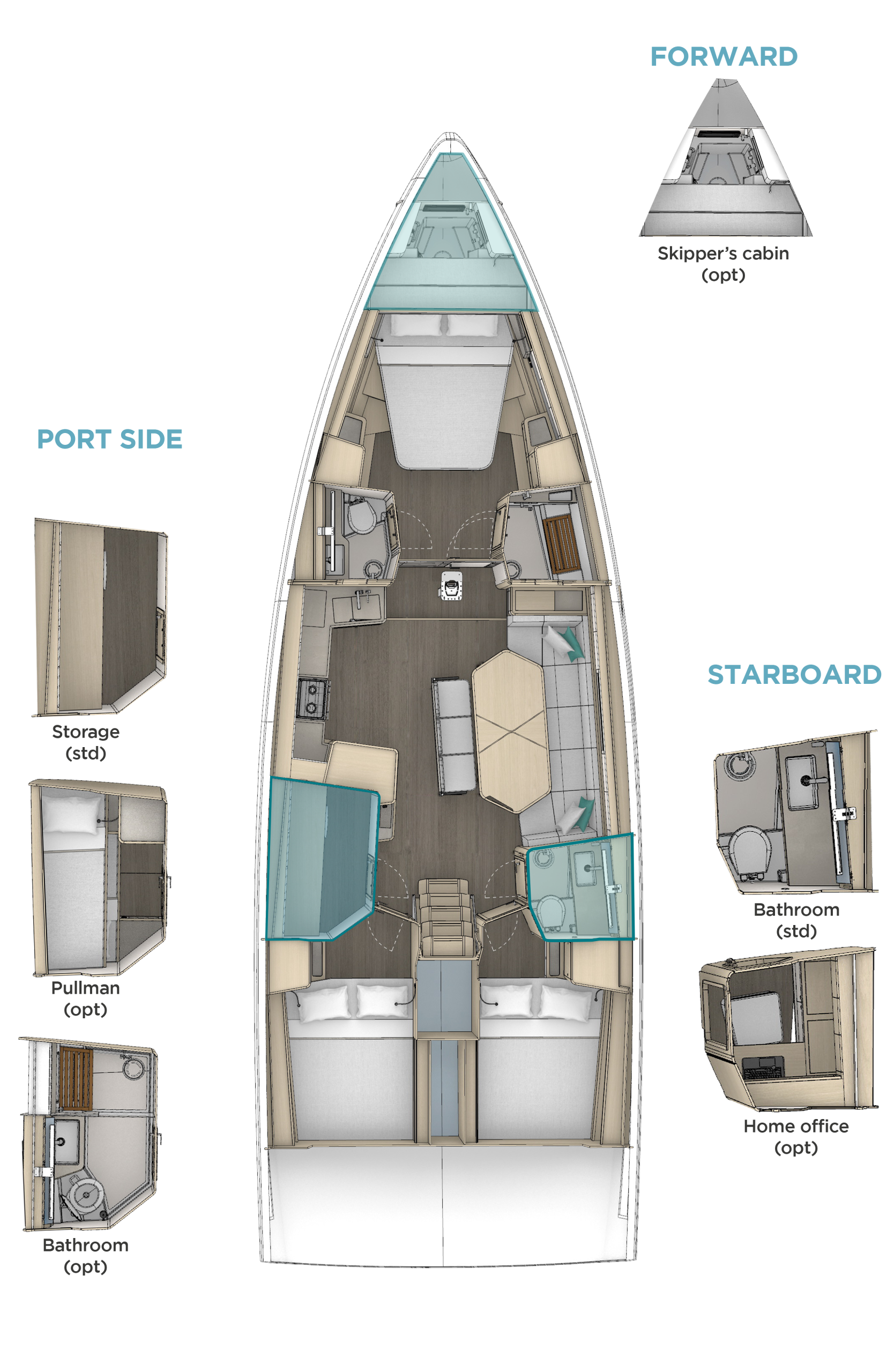
D48-3-cabines-cuisine-en-long-scaled — Dufour Yachts
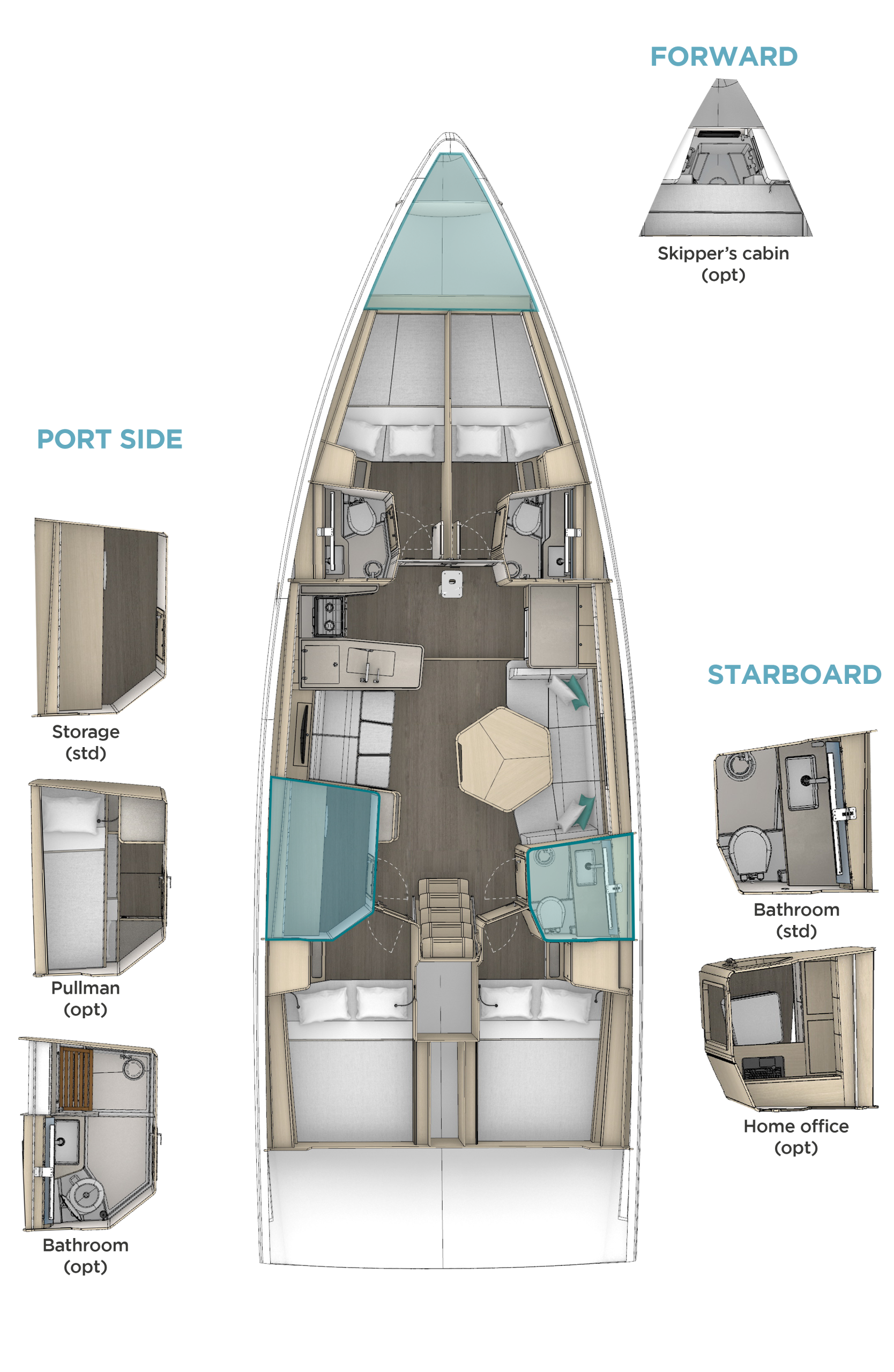
D48-4-cabines-cuisine-frontale-scaled — Dufour Yachts
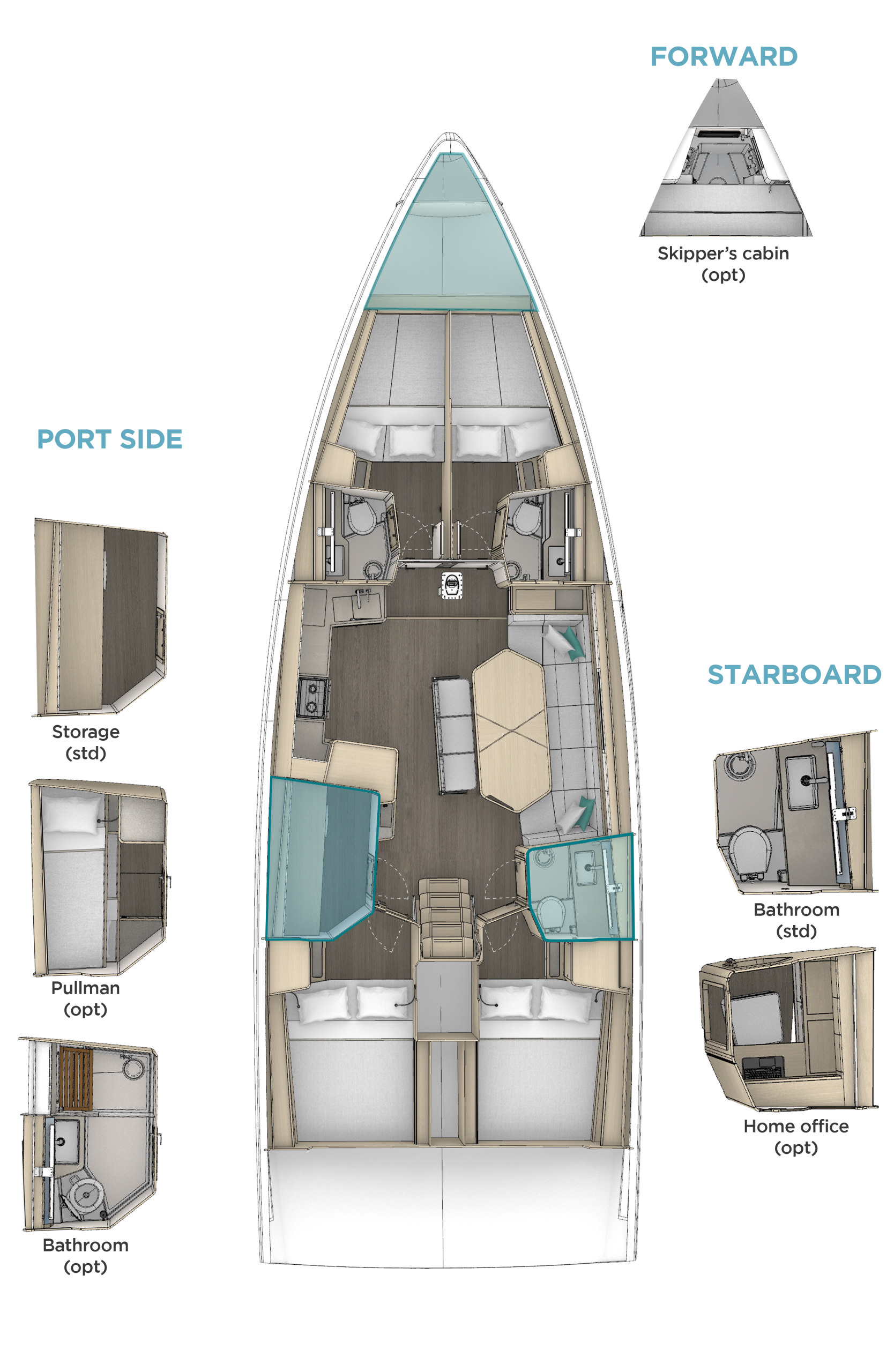
D48-4-cabines-cuisine-en-long-scaled — Dufour Yachts
Volume production
French sailing-yacht builder founded by Michel Dufour in 1964, building monohulls at Périgny near La Rochelle and part of the Fountaine Pajot group since 2018 — six models from the Dufour 37 to the Dufour 54, hull lengths 10.77 to 16.84 m, two to five cabins.
Michel Dufour founded the yard at La Rochelle in 1964, and its timeline credits that first boat, the Sylphe, as the first production fibreglass sailing yacht sold ready to sail. The Arpège of 1970 took a reverse transom that stretched it to 9.25 m and was built 1,500 times; in the 1980s, under the impetus of Marcel Bich, the yard turned towards performance and racing with renowned naval architects, a period the 3800 and 4800 stand for; and in the 1990s the Classic range ran to fourteen models from 30 to 50 feet in five years. Umberto Felci's Dufour 40 of 2002 brought modern lines and, by the yard's account, the Sailing Yacht of the Year title for 2003, and the Dufour 365 Grand Large was named Sailing Yacht of the Year in 2006, opening the Grand Large range of fast, comfortable cruisers. After modernising its production and widening its ranges from 2008, Dufour joined the Fountaine Pajot group as a majority-owned company in 2018, moving to infusion and further upmarket; in 2021 it fitted a hybrid-electric drive with hydrogeneration to the 41, 44, 470 and 530, and in 2026 it set a new course centred on life outdoors. The yard counts more than a hundred models and some twenty-five thousand yachts since 1964.
Visit brand pageEvery model Dufour Yachts publishes, by length — where this one sits in the range.