Sail area / displacement
How much sail the boat carries for its weight — its power in light air.
- not published: sail area
How it is worked out
sail area (ft²) ÷ (displacement as ft³ of seawater)^⅔
1 / 7
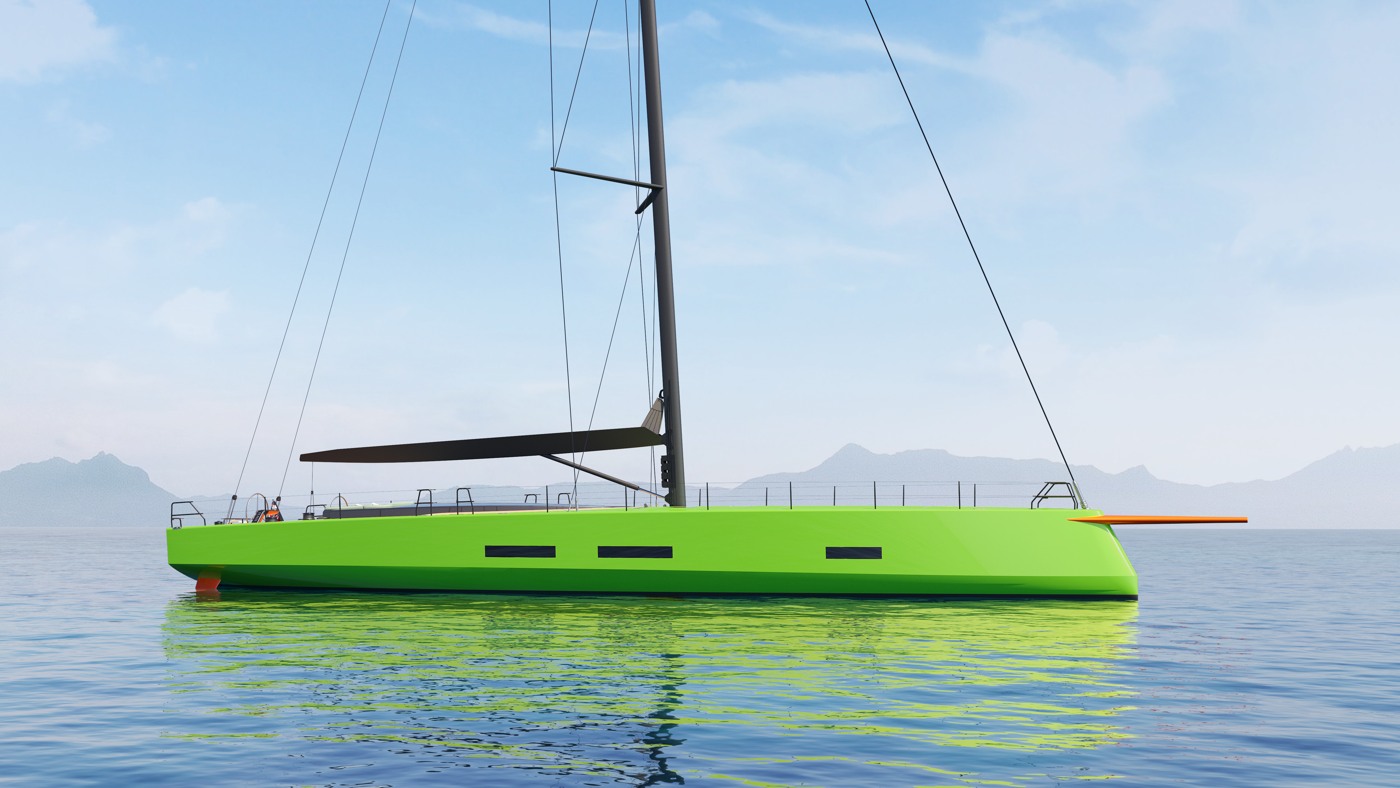
DU2539-B80CR-Exterior-01-copy — Baltic Yachts
* A standard reference image, not the actual boat — shown to help visualise this model's published dimensions.
Classic yacht-design ratios worked out from the builder's published figures, each shown against the bands designers read it by.
How much sail the boat carries for its weight — its power in light air.
sail area (ft²) ÷ (displacement as ft³ of seawater)^⅔
How heavy the boat is for its waterline length. Lower is lighter and quicker; higher is steadier and roomier.
displacement (long tons) ÷ (0.01 × waterline length in ft)³
The share of the weight carried in the keel — a rough guide to stiffness, though how deep that weight sits matters as much.
ballast ÷ displacement × 100
Ted Brewer's measure of how gently a boat moves in a seaway. Higher means a slower, easier motion.
displacement (lb) ÷ (0.65 × (0.7 × LWL + 0.3 × LOA) × beam^1.333), lengths in ft
A guide from the inquiry after the 1979 Fastnet race: below 2 was taken as suited to ocean passages. It ignores hull shape and where the ballast sits.
beam (ft) ÷ (displacement as ft³ of seawater)^⅓
Roughly the speed a displacement hull reaches before it has to climb its own bow wave.
1.34 × √(waterline length in ft), in knots
Most builders publish a light displacement. The ratios were defined on a loaded boat, so every boat here reads a little lighter than a surveyor's figure would — all alike, which keeps them comparable.
Figures read frombalticyachts.fi/yachts/baltic-80-cafe-racer/· Technicalread 10/17/2026
Custom
Finnish builder of advanced-composite sailing yachts founded in 1973 by five boatbuilders in Ostrobothnia — mostly full-custom carbon superyachts from Pietarsaari, plus the semi-custom Baltic 67 Performance Cruiser and the 68 and 80 Café Racer daysailers.
Five skilled boatbuilders set up Baltic Yachts in Bosund in 1973 with a clear aim: lighter, stiffer, faster yachts. The first Baltic 46 was unveiled at the Hamburg Boat Show in 1974 and the first custom boat, the Baltic 42 Tina-I-Punkt, was delivered in 1975; the Baltic 39 followed in 1977 and became the most popular model, with 74 hulls sold by 1983. In the late 1970s the yard began making small parts in carbon, bringing carbon rudder shafts to cruising yachts and vacuum bagging to larger parts. Its first maxi, the Baltic 80 Midnight Sun, came in 1982, its first powerboat, the Baltic M48 Far Niente, in 1997, and its first yacht over 100 feet, the Baltic 147 Visione, in 2002. The Pietarsaari yard opened in 2009; the Baltic 197 Hetairos of 2011 was at the time the largest carbon composite yacht in the world, and the Baltic 175 Pink Gin of 2017 the largest carbon sloop. The Service & Refit centre in Palma opened in 2014, the first Baltic 67 Performance Cruiser was delivered in 2018, and in 2019 the Baltic 142 Canova became the first superyacht with a DSS foil. More than 550 yachts have been launched, built by craftsmen many of whom come from Ostrobothnia, a region with generations of shipbuilding.
Visit brand pageEvery model Baltic Yachts publishes, by length — where this one sits in the range.