Sail area / displacement
How much sail the boat carries for its weight — its power in light air.
- 24.9· Racing
How it is worked out
sail area (ft²) ÷ (displacement as ft³ of seawater)^⅔
published upwind sail area
1 / 6
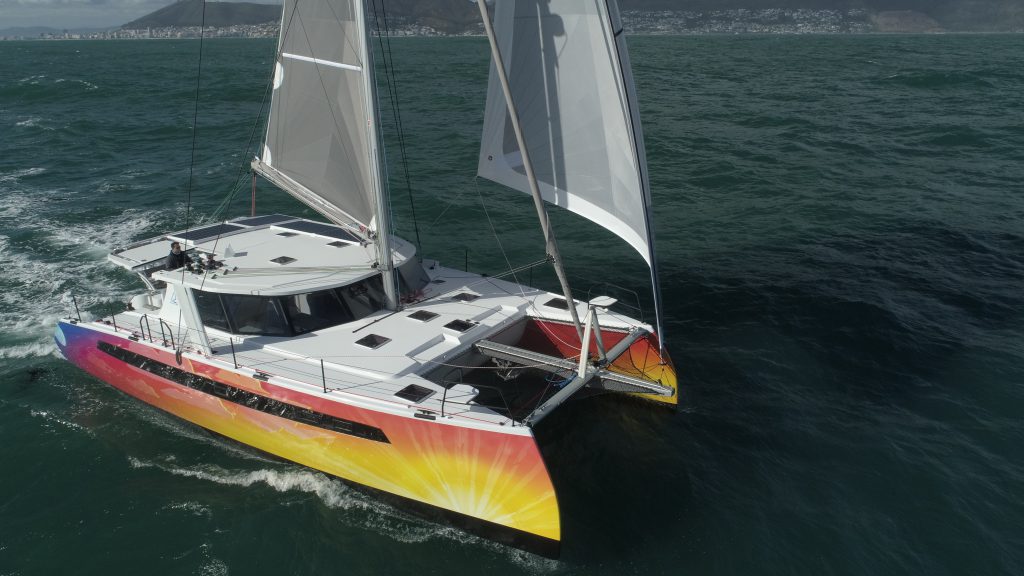
* A standard reference image, not the actual boat — shown to help visualise this model's published dimensions.
From the published figures: LOA 14.71 m · 4 cabins · fresh water 780 L
Tags are derived from certified class, length, sail area, accommodation and tankage using the criteria described on the Sources page; an editor may add or remove one.
Classic yacht-design ratios worked out from the builder's published figures, each shown against the bands designers read it by.
How much sail the boat carries for its weight — its power in light air.
sail area (ft²) ÷ (displacement as ft³ of seawater)^⅔
published upwind sail area
How heavy the boat is for its waterline length. Lower is lighter and quicker; higher is steadier and roomier.
displacement (long tons) ÷ (0.01 × waterline length in ft)³
Most builders publish a light displacement. The ratios were defined on a loaded boat, so every boat here reads a little lighter than a surveyor's figure would — all alike, which keeps them comparable.
What the builder publishes about how fast, how strong and how much the boat carries.
Fuel and water on one scale: a tank twice the height holds twice as much.
A figure marked with a quote mark was read from the builder's page. Open it for the exact line, the page and the date.
Figures read fromthe builder's page
Semi-custom
American-founded builder of performance sailing catamarans, established in 2013 by Phillip Berman, with boats built by partner yards in Saint Francis and Cape Town, South Africa.
Visit brand pageEvery model Balance Catamarans publishes, by length — where this one sits in the range.
Balance Catamarans
LOA: 13.5 m
Seawind Catamarans
LOA: 13.7 m