Sail area / displacement
How much sail the boat carries for its weight — its power in light air.
- not published: sail area
How it is worked out
sail area (ft²) ÷ (displacement as ft³ of seawater)^⅔
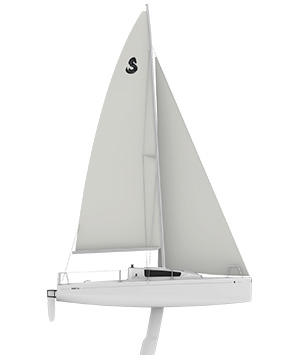
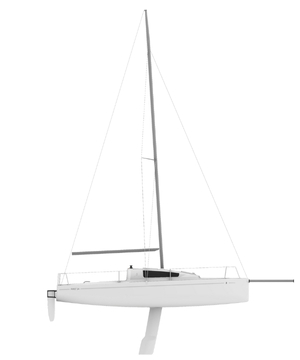
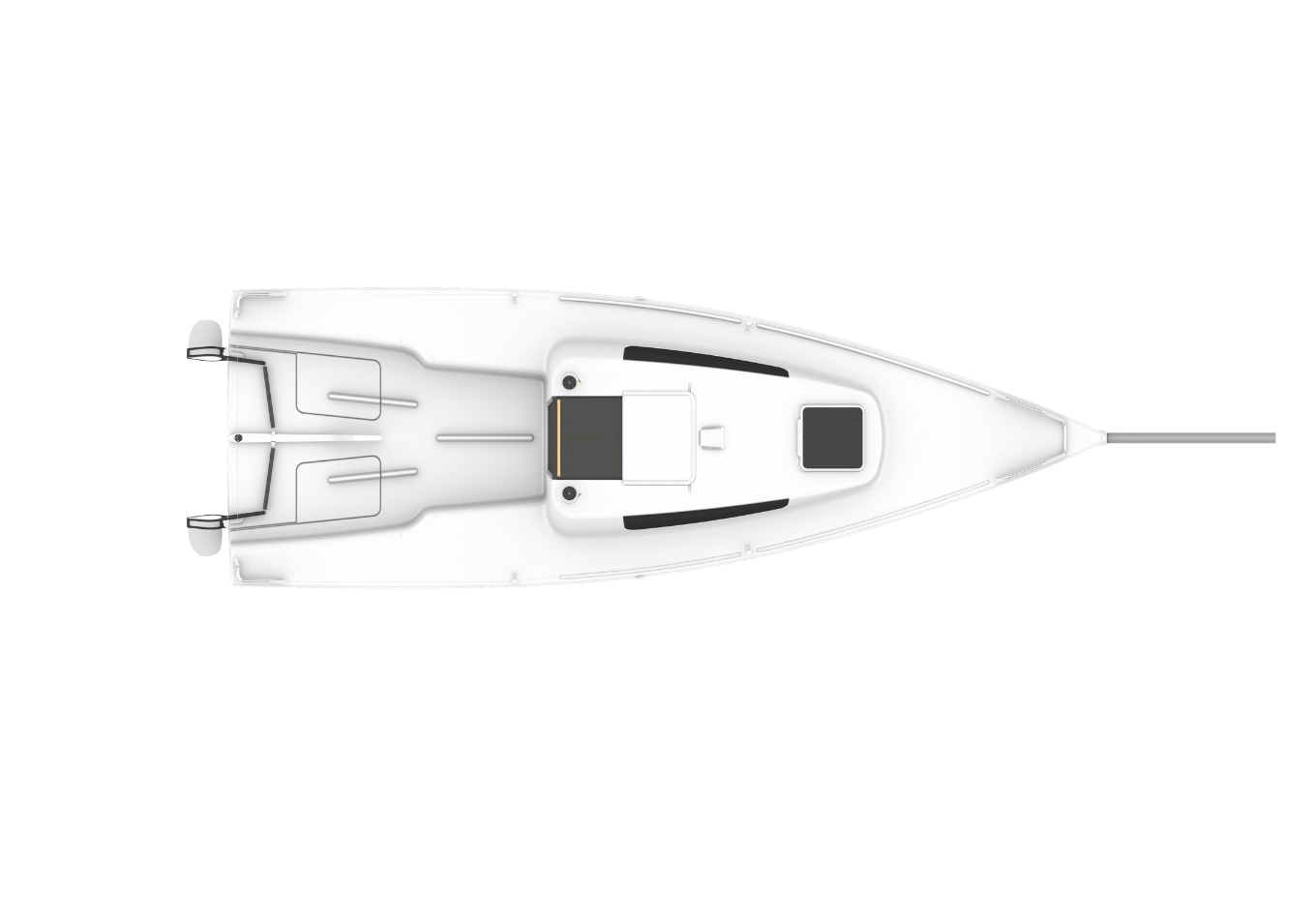
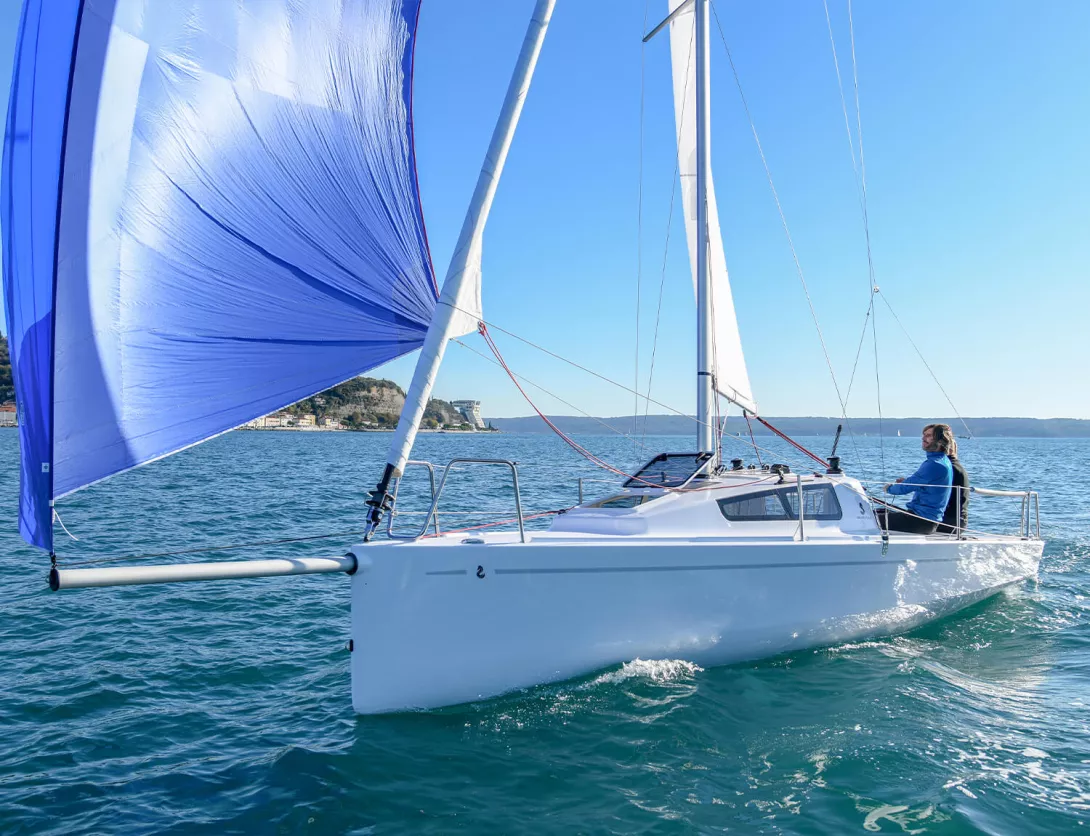
* A standard reference image, not the actual boat — shown to help visualise this model's published dimensions.
From the published figures: CE Category C · LOA 7.29 m
Tags are derived from certified class, length, sail area, accommodation and tankage using the criteria described on the Sources page; an editor may add or remove one.
Classic yacht-design ratios worked out from the builder's published figures, each shown against the bands designers read it by.
How much sail the boat carries for its weight — its power in light air.
sail area (ft²) ÷ (displacement as ft³ of seawater)^⅔
How heavy the boat is for its waterline length. Lower is lighter and quicker; higher is steadier and roomier.
displacement (long tons) ÷ (0.01 × waterline length in ft)³
The share of the weight carried in the keel — a rough guide to stiffness, though how deep that weight sits matters as much.
ballast ÷ displacement × 100
Ted Brewer's measure of how gently a boat moves in a seaway. Higher means a slower, easier motion.
displacement (lb) ÷ (0.65 × (0.7 × LWL + 0.3 × LOA) × beam^1.333), lengths in ft
A guide from the inquiry after the 1979 Fastnet race: below 2 was taken as suited to ocean passages. It ignores hull shape and where the ballast sits.
beam (ft) ÷ (displacement as ft³ of seawater)^⅓
Roughly the speed a displacement hull reaches before it has to climb its own bow wave.
1.34 × √(waterline length in ft), in knots
Most builders publish a light displacement. The ratios were defined on a loaded boat, so every boat here reads a little lighter than a surveyor's figure would — all alike, which keeps them comparable.
Certified CE design category C (Inshore): the wind and waves the EU Recreational Craft Directive says this boat is designed to take.
Sheltered waters
Inshore
Offshore
Ocean
Design limits set by the EU Recreational Craft Directive (2013/53/EU), in significant wave height. A category covers the conditions of those below it. It is the limit the boat was designed to, not a promise that it is safe in any conditions within it — that judgement stays with the skipper.
A figure marked with a quote mark was read from the builder's page. Open it for the exact line, the page and the date.
Figures read fromthe builder's page
3 drawings from the builder's page: general arrangement, sail plan, profile.
Volume production
French yacht builder founded in 1884, among the world's largest producers of sailing and motor yachts.
Benjamin Bénéteau, born at Saint-Gilles into a large family of little means and a ship's boy at twelve, created his boatyard on the Quai des Greniers in 1884 and in 1909 designed the region's first engine-powered fishing boat. After the Great War the yard restarted in 1928 under his son André, aged 21; it prospered again after the Second World War, and in 1963 André's children, André and Annette, built polyester dinghies for the sardine boats -- the material that changed everything. At their first Paris Boat Show in January 1965 three dealers signed up within hours, in 1972 the family built its first plant designed for semi-industrial production, exports followed in the 1970s with a subsidiary in Annapolis in 1976, and in 1985, besides the new factory at Challans, Beneteau opened its first production site abroad at Marion, South Carolina. The Oceanis range was born from the Idylle boats developed with The Moorings -- Philippe Briand's Oceanis 350 and 430 were an immediate success and the range now counts eight generations -- the First was revived with Philippe Starck's First 35 S5 of 1987, and in 1989 the Figaro one-design chosen for the Figaro race began the Figaro era.
Visit brand pageEvery model Beneteau publishes, by length — where this one sits in the range.