Tanks
One scale per liquid across every boat: a tank twice the height holds twice as much.
Garcia Exploration 52
Fuel317 galWater232 gal29 gal of water per berth
Tartan 53
Fuel125 galWater250 gal25 gal of water per berth
Garcia Exploration 52 is the heaviest at 42,990 lb, 12% more than Tartan 53. Garcia Exploration 52 draws the least water, 4.2 ft — 2.5 ft less than Tartan 53. Garcia Exploration 52 has the lowest air draft, 70.5 ft; Tartan 53 stands 9.4 ft taller.
Worked out from the published figures below — arithmetic, not opinion.
Dark icons are the standard layout; faded ones are what the larger layout adds.
Garcia Yachts
Garcia Exploration 52
Sailing Monohull
Length : beam 3.5 : 1
Tartan Yachts
Tartan 53
Sailing Monohull
Length : beam 3.3 : 1
Length : beam is length divided by beam — the higher it is, the slimmer the hull. Multihulls read low by nature.
| Model | 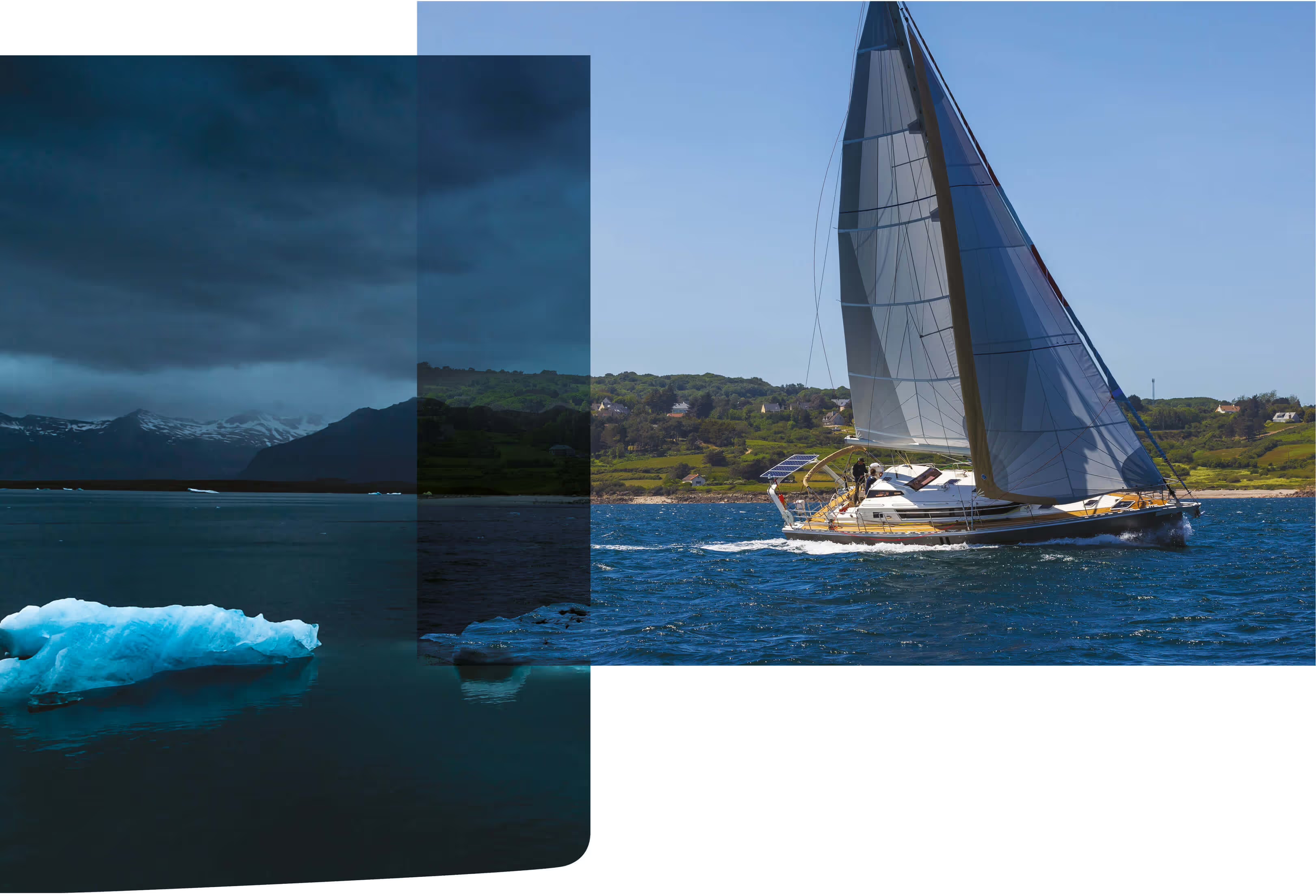 Garcia Yachts Garcia Exploration 52 | 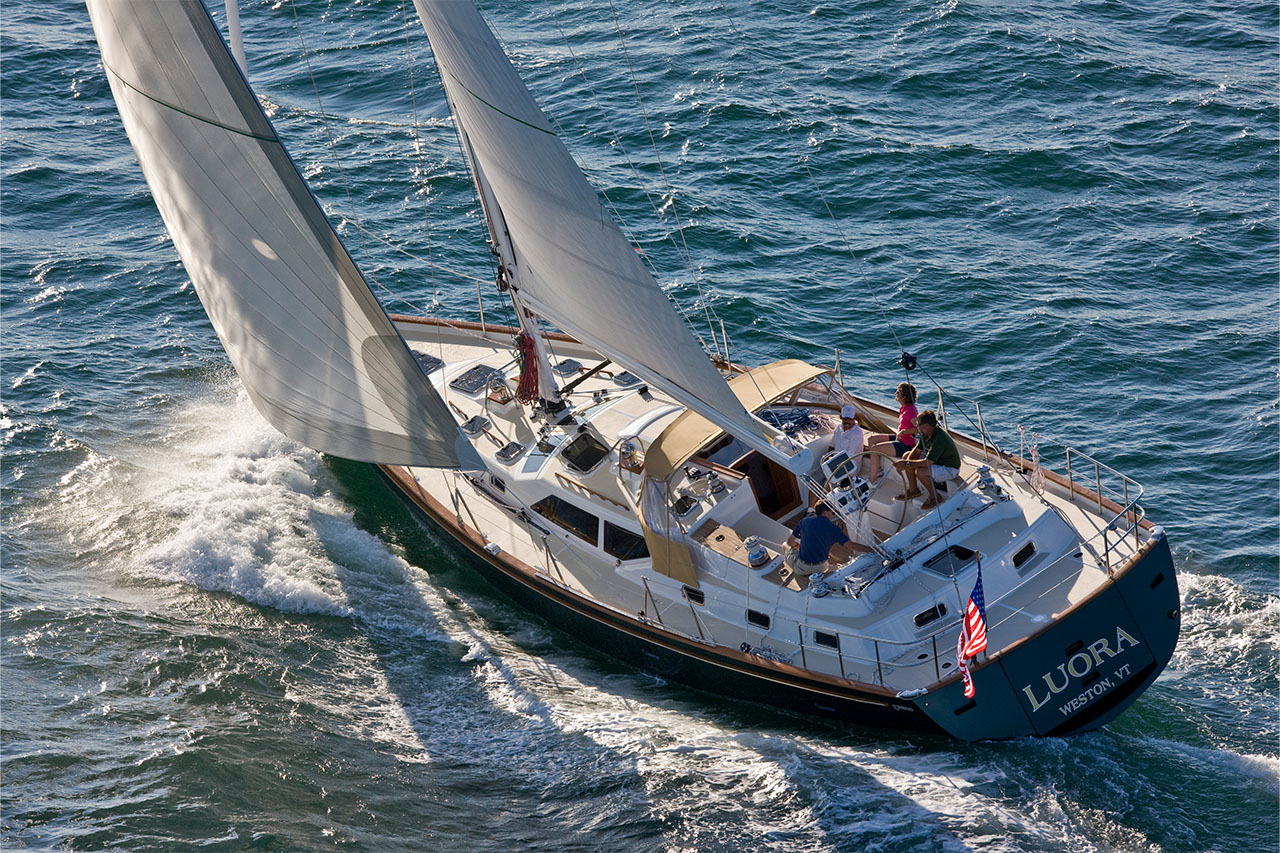 Tartan Yachts Tartan 53 |
|---|---|---|
| Overview | ||
| Brand | Garcia Yachts | Tartan Yachts |
| Model | Garcia Exploration 52 | Tartan 53 |
| Generation | Unknown | Unknown |
| Hull type | Sailing Monohull | Sailing Monohull |
| Propulsion | Sail | Sail |
| Production status | In production | In production |
| Production start year | Unknown | Unknown |
| Production end year | Unknown | Unknown |
| Designer | Unknown | Unknown |
| Dimensions | ||
| LOA | 54.6 ft | 53.5 ft |
| Hull length | 51.2 ft | Unknown |
| Beam | 15.7 ft | 16.1 ft |
| Draft | 4.2 ft–9.5 ft | 6.7 ft |
| Displacement | 42,990 lb | 38,226 lb |
| Accommodation | ||
| Cabins | 3–4 | 2–4 |
| Heads | Unknown | 2 |
| Berths | 5–8 | 6–10 |
| Performance & Rig | ||
| Main sail | Unknown | Unknown |
| Jib | Unknown | Unknown |
| Genoa | Unknown | Unknown |
| Upwind sail area | 1,292 ft² | 1,382 ft² |
| Downwind sail area | 2,002 ft² | 1,463 ft² |
| Engine power | 115 hp | 106 hp |
| Engine count | 1 | 1 |
| Materials | ||
| Hull material | Aluminium | Unknown |
| Deck material | Unknown | Unknown |
| Mast material | Aluminium | Unknown |
| Keel type | Integral centreboard | Unknown |
| Rudder type | Unknown | Unknown |
| Sources | Figures read fromBROCHURE_GARCIA-E_52-EN-W_Pages.pdf(PDF linked from the builder's page)read 9/13/2026from the brochure PDF and the site's comparison table | Figures read fromtartanyachts.com/models/tartan-53/· Dimensions / Accommodations / Tankage / Sail Arearead 9/18/2026 |
Each boat's published length and beam seen from above, and its mast height and draft from the side, all drawn on one scale.
Outlines are schematic; the dimensions are the builder's.
Each boat's layouts, profiles and sail plans as its builder published them. Step through each column to line up the drawings you want to compare.
Garcia Exploration 52
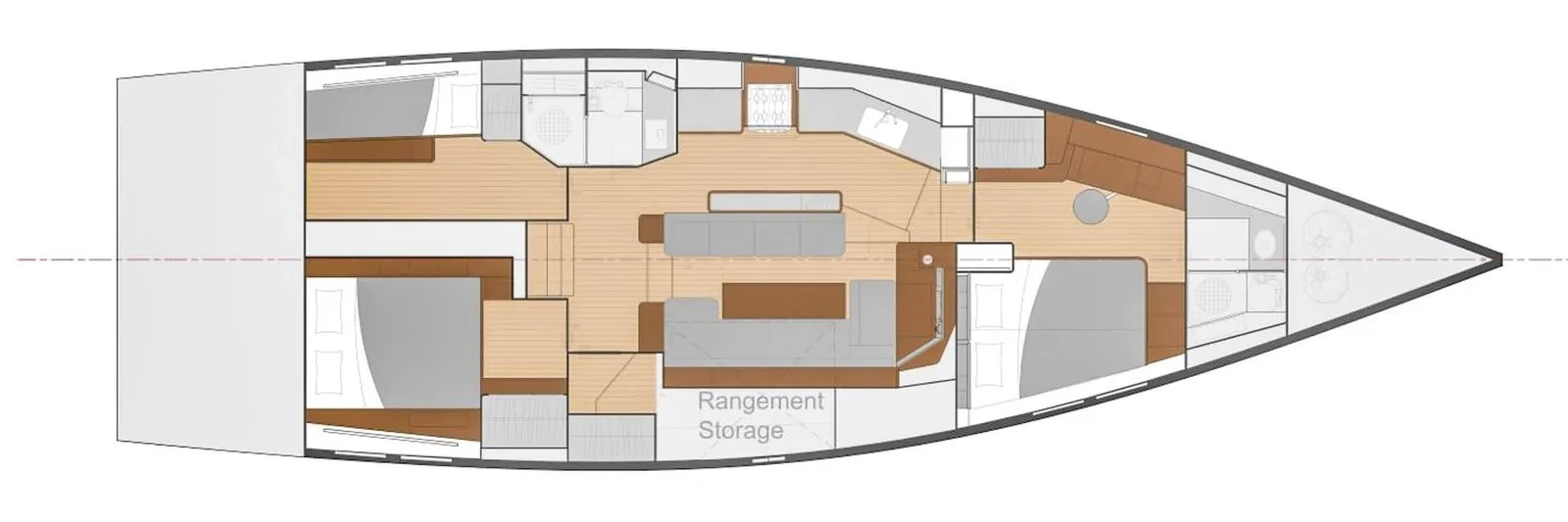
GARCIA-EXPLORATION_52-Plan_Standard — Garcia Yachts
Tartan 53
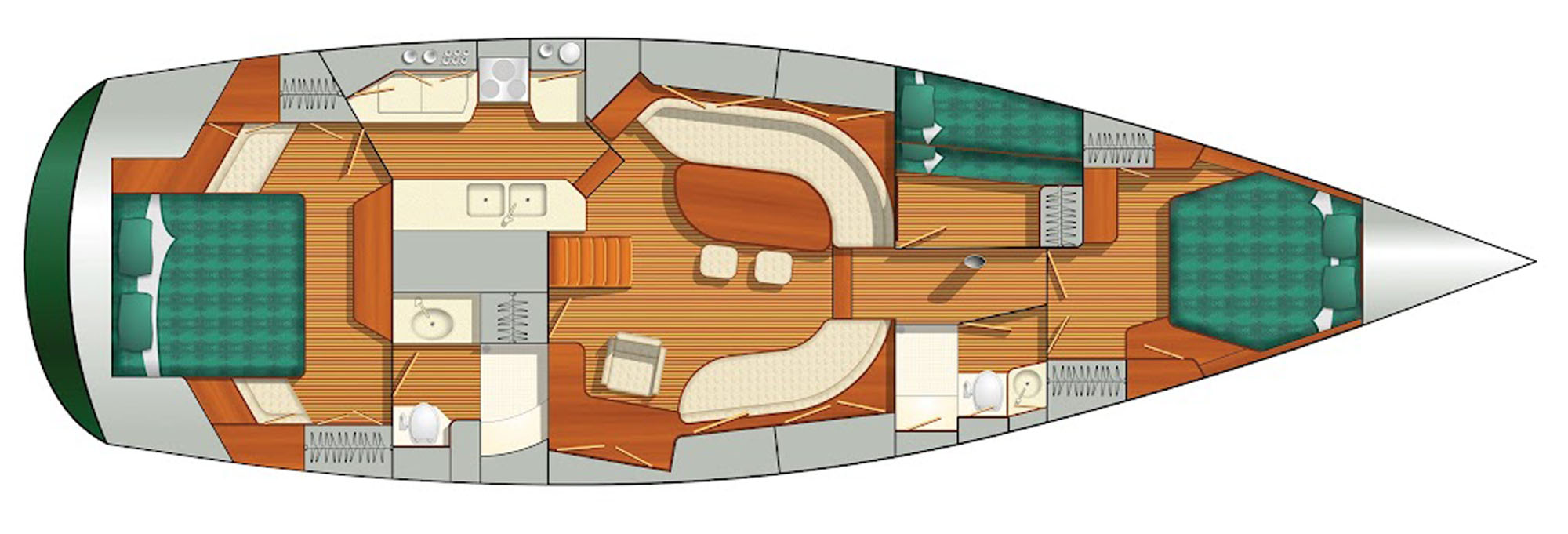
535accommodations2 — Tartan Yachts
What the builders publish about how fast, how strong and how far — each figure on one scale for every boat.
One scale per liquid across every boat: a tank twice the height holds twice as much.
Garcia Exploration 52
29 gal of water per berth
Tartan 53
25 gal of water per berth
Classic yacht-design ratios worked out from each builder's published figures. They compare boats; they don't grade them.
How much sail the boat carries for its weight — its power in light air.
sail area (ft²) ÷ (displacement as ft³ of seawater)^⅔
Garcia Exploration 52: published upwind sail area
Tartan 53: published upwind sail area
How heavy the boat is for its waterline length. Lower is lighter and quicker; higher is steadier and roomier.
displacement (long tons) ÷ (0.01 × waterline length in ft)³
The share of the weight carried in the keel — a rough guide to stiffness, though how deep that weight sits matters as much.
ballast ÷ displacement × 100
Ted Brewer's measure of how gently a boat moves in a seaway. Higher means a slower, easier motion.
displacement (lb) ÷ (0.65 × (0.7 × LWL + 0.3 × LOA) × beam^1.333), lengths in ft
A guide from the inquiry after the 1979 Fastnet race: below 2 was taken as suited to ocean passages. It ignores hull shape and where the ballast sits.
beam (ft) ÷ (displacement as ft³ of seawater)^⅓
Roughly the speed a displacement hull reaches before it has to climb its own bow wave.
1.34 × √(waterline length in ft), in knots
Most builders publish a light displacement. The ratios were defined on a loaded boat, so every boat here reads a little lighter than a surveyor's figure would — all alike, which keeps them comparable.
The boats most like the ones above, by hull form, size and use.
Nautor Swan
Swan 54Sailing Monohull · 55.8 ft
Nautor Swan
Swan 51Sailing Monohull · 55.4 ft
Faurby Yachts
Faurby 500 DSSailing Monohull · 49 ft
Solaris
55Sailing Monohull · 55.4 ft